
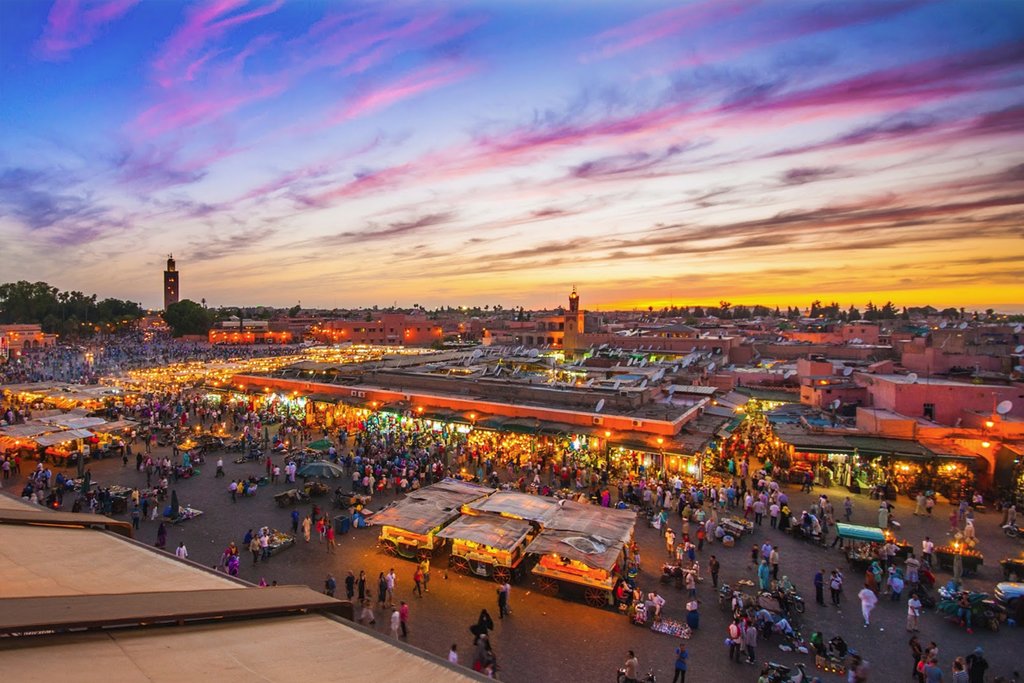
It's just past six in the evening in Marrakech, and the call to prayer is layering itself over the smell of charcoal smoke rising from a dozen grill stalls in Jemaa el-Fna. A father from Ontario is standing three feet from me, one hand on his daughter's shoulder, the other holding a paper cone of orange juice he bought from a cart older than he is. He turns to me and asks the question I hear more than any other, in some version or another, almost every week of the year: is Morocco safe for American and Canadian families in 2026, or are we about to find out the hard way that we made a mistake?
I've been living and working in Marrakech for years now, driving families from the Atlas Mountains to the dunes outside Merzouga, and I understand exactly why the question keeps coming. Morocco doesn't look like home. The alleyways twist instead of running in grids. The currency is unfamiliar. The language shifts between Darija, French, and Berber depending on which town you're in. Unfamiliar reads as unsafe to a lot of people, even when it isn't. So let's actually answer it, properly, without the brochure language.
 This square is the one place I tell every family to build extra time into their evening schedule, not because of danger, but because it's genuinely one of the better free shows in North Africa. Storytellers, henna artists, and the occasional trained monkey act (best avoided, for the monkey's sake as much as anyone's) all cluster in and around the square as the sun drops. Keep bags zipped, keep phones in front pockets rather than back ones, and you'll be fine.
our full Marrakech guide
our private driver fleet
our family tour itineraries
Morocco in 2026 is not the country your uncle is picturing when he raises an eyebrow about your trip. It's a place where families walk medina lanes after dinner, where kids fall asleep in the back seat somewhere between the Atlas Mountains and the first sight of red dunes, and where the biggest danger is usually just falling in love with a rug you don't have room for in your suitcase. If you're ready to start planning, message us directly on WhatsApp — we'll walk you through a private, family-paced itinerary built around your dates, your kids' ages, and exactly how many mountain passes you'd rather leave to someone else.
Is Morocco Safe for American and Canadian Families in 2026? The Short Answer
Yes — and the longer answer is more interesting than a simple yes or no, because safety in Morocco isn't really about crime statistics. It's about knowing which parts of a very old, very layered country require a bit of local know-how, and which parts are exactly as gentle as they look. Violent crime targeting tourists is genuinely rare here. What you'll actually run into is closer to what you'd expect in any heavily touristed city: pickpocketing in dense crowds, the odd overly persistent shopkeeper, and drivers who treat lane markings as more of a suggestion than a rule. None of that is unique to Morocco, and none of it is the kind of danger that should keep a family from booking a spring break trip to the Sahara.What "Safety" Actually Means When You're Traveling With Kids
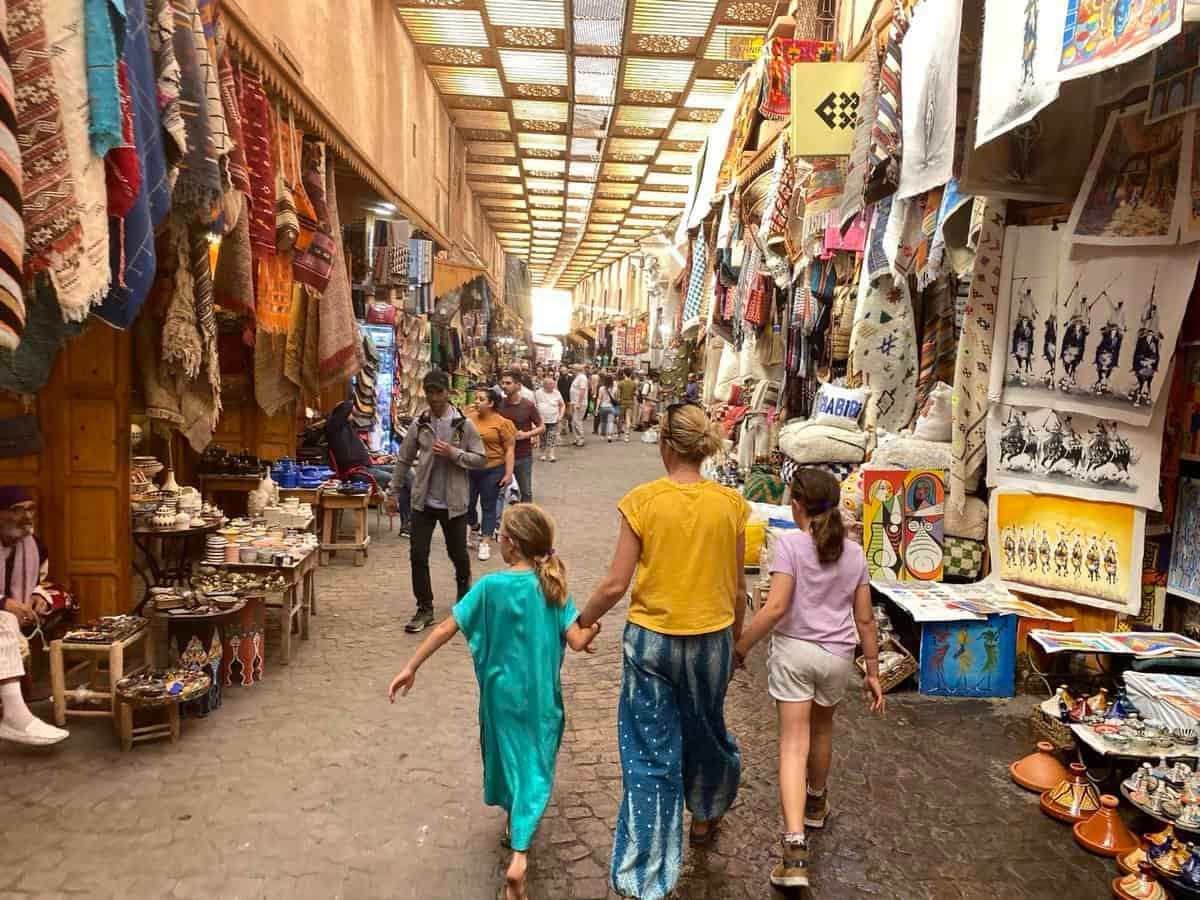
Parents rarely ask about terrorism or political unrest, even though that's what shows up in the search results at three in the morning when the anxiety kicks in. What they're really asking is smaller and more specific. Will my ten-year-old get separated from us in a crowd? Will someone try to hand my child a chameleon and then demand money for the photo? Can I trust the food from a street stall? The honest answers: keep a hand on smaller kids in the souks near Marrakech's Bahia Palace, because the crowds there can thicken fast on a Saturday afternoon. Yes, the chameleon thing happens, and it's more comic than dangerous — decline politely, keep walking, and it becomes a good story at dinner rather than a problem. And the food is one of the safest parts of the whole trip, provided you eat where the locals eat and where the turnover is high, which usually means the busiest stall, not the emptiest one.Marrakech After Dark: What It's Really Like Walking the Souks at Night
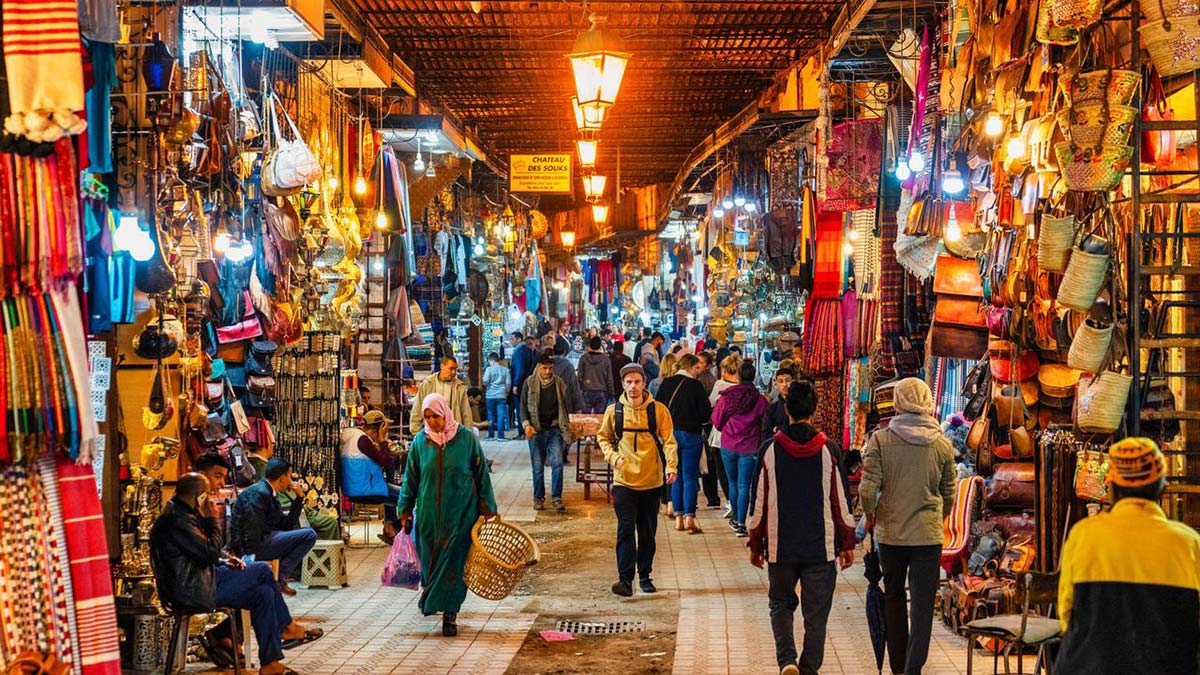
I'll admit the medina looks intimidating in photos taken at dusk, all shadow and narrow brick. In person, it's something closer to a small, dimly lit village where everyone seems to know everyone else, including, eventually, you. Families walk the lanes near Jemaa el-Fna well past nine most evenings, past spice stalls, tea sellers, and the man who's been fixing babouche slippers on the same corner for what looks like twenty years.A Word About Jemaa el-Fna
This square is the one place I tell every family to build extra time into their evening schedule, not because of danger, but because it's genuinely one of the better free shows in North Africa. Storytellers, henna artists, and the occasional trained monkey act (best avoided, for the monkey's sake as much as anyone's) all cluster in and around the square as the sun drops. Keep bags zipped, keep phones in front pockets rather than back ones, and you'll be fine.
our full Marrakech guide
The Roads: Should You Worry About Driving Through the Atlas Mountains
This is where I get slightly more serious, because it's the one part of the "is Morocco safe for American and Canadian families in 2026" question that deserves real caution — just not the kind most people imagine.The Tizi n'Tichka Pass, and Why You Don't Have to Drive It Yourself
The Tizi n'Tichka pass, the switchback-heavy road connecting Marrakech to Ouarzazate, is stunning and genuinely nerve-wracking if you're behind the wheel yourself, especially with kids arguing in the back seat and a truck overtaking on a blind curve up ahead. Rental cars are cheap here, and I understand the appeal of independence. But this is a road built by people who've driven it ten thousand times, and it shows. This is the single biggest reason I tell families to hire a private driver rather than self-drive: it isn't about comfort, it's about a mountain road that punishes distraction, and a driver who already knows every one of its curves by heart.our private driver fleet
Petty Crime, Scams, and the Truth About Persistent Vendors
A young couple I drove to Essaouira last spring spent the first hour of the ride apologizing to each other for having been "rude" to a carpet seller in the souk who wouldn't take no for an answer. I had to explain, gently, that there's no rudeness involved in walking away from a sales pitch that's been rehearsed since before you were born. Persistence is a business strategy here, not a threat, and once families understand that, the tension usually drains out of the whole trip within a day or two. The scams that do exist are almost comically low-stakes: an "official guide" outside a monument who isn't official at all, a taxi that "forgets" the meter exists, someone offering to show you the "real" way into a shop that happens to be their cousin's. A firm decline and a smile solves ninety percent of it.What About Political Stability and Current Travel Advisories in 2026
Morocco remains one of the more politically stable countries in North Africa, and both the US State Department and Canada's travel advisory list it at their lowest or second-lowest risk tiers, generally the same category as much of Western Europe. That can and does shift with global events, so checking the current advisory before you book is simply good practice, not a red flag specific to Morocco.The Real Safety Net: Traveling With a Private Driver Instead of Renting a Car
If there's one thing that changes the entire safety equation for a family trip here, it's this: don't rent a car and figure it out as you go. A private, English-speaking driver isn't a luxury add-on so much as it's the single decision that removes almost every genuine risk from the trip — the mountain roads, the parking scams, the wrong turn into a one-way alley three feet wider than your rental car.our family tour itineraries
Morocco in 2026 is not the country your uncle is picturing when he raises an eyebrow about your trip. It's a place where families walk medina lanes after dinner, where kids fall asleep in the back seat somewhere between the Atlas Mountains and the first sight of red dunes, and where the biggest danger is usually just falling in love with a rug you don't have room for in your suitcase. If you're ready to start planning, message us directly on WhatsApp — we'll walk you through a private, family-paced itinerary built around your dates, your kids' ages, and exactly how many mountain passes you'd rather leave to someone else.