
Most people who visit Morocco follow the same loop. Marrakech. Fes.
Chefchaouen. Maybe Merzouga if they’re feeling adventurous. It’s a good loop
— I’m not going to pretend otherwise. But after guiding private tours across
this country for years, I can tell you something with confidence: the Morocco
that stays with people longest is rarely the Morocco they planned to see.
It’s the detour you took because the road looked interesting. The town your driver mentioned offhand. The valley you stopped in because someone needed a bathroom break and you ended up staying for two hours.
This list is my attempt to bottle some of that. These are places I’ve taken clients who asked for something different — people who’d already done Marrakech, or who simply wanted to avoid the selfie crowds. Not one of these places is a secret to Moroccans. But to most foreign visitors, they might as well be.
 Everyone goes to Aït Benhaddou — and yes, it’s worth seeing. But if you want
the same ancient kasbahs without a single tour bus in sight, drive 20 minutes
further down the Draa Valley to Tamnougalt.
Everyone goes to Aït Benhaddou — and yes, it’s worth seeing. But if you want
the same ancient kasbahs without a single tour bus in sight, drive 20 minutes
further down the Draa Valley to Tamnougalt.
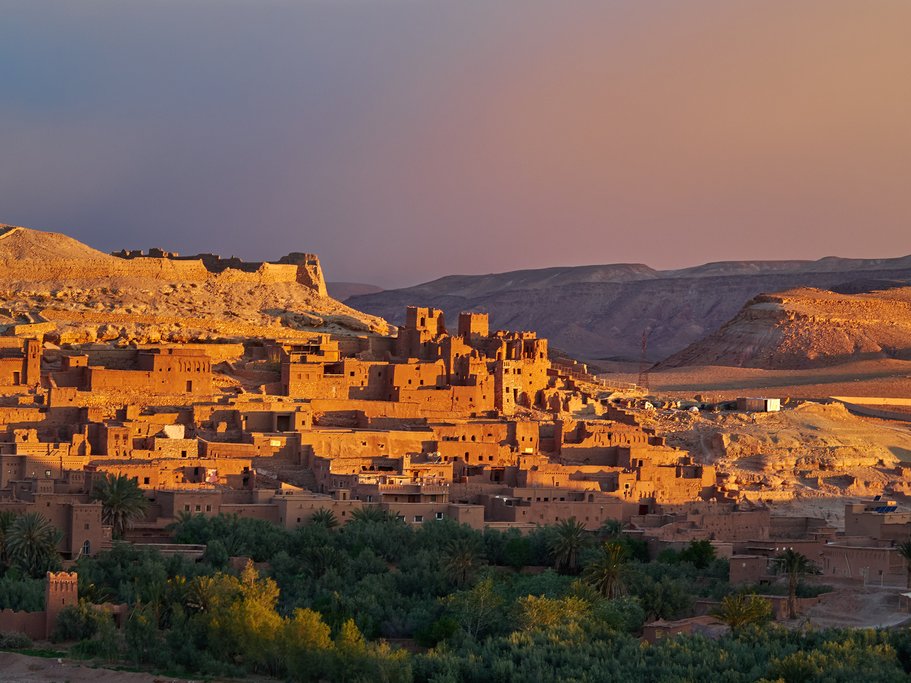
This fortified village has been continuously inhabited for over 500 years. It appeared in several films shot in the region, but nobody talks about it. The guardian — an elderly man named Hassan when I last visited — will walk you through rooms where Jewish merchants traded spices, past grain stores still used today, through corridors so narrow two people can’t pass each other without turning sideways.
No entrance fee. No souvenir stalls outside. Just a living kasbah that happens to let you in.
How to get there: 12km south of Agdz on the N9 road heading toward Zagora. You’ll miss it if you’re not looking — it’s the cluster of mud towers on the left, just before the road bends.
 Until relatively recently, non-Muslims were not permitted to spend the night in
Moulay Idriss Zerhoun. The rule was eventually lifted, but the town never quiteadjusted to tourism the way other Moroccan cities did — which is precisely why you should go.
Until relatively recently, non-Muslims were not permitted to spend the night in
Moulay Idriss Zerhoun. The rule was eventually lifted, but the town never quiteadjusted to tourism the way other Moroccan cities did — which is precisely why you should go.
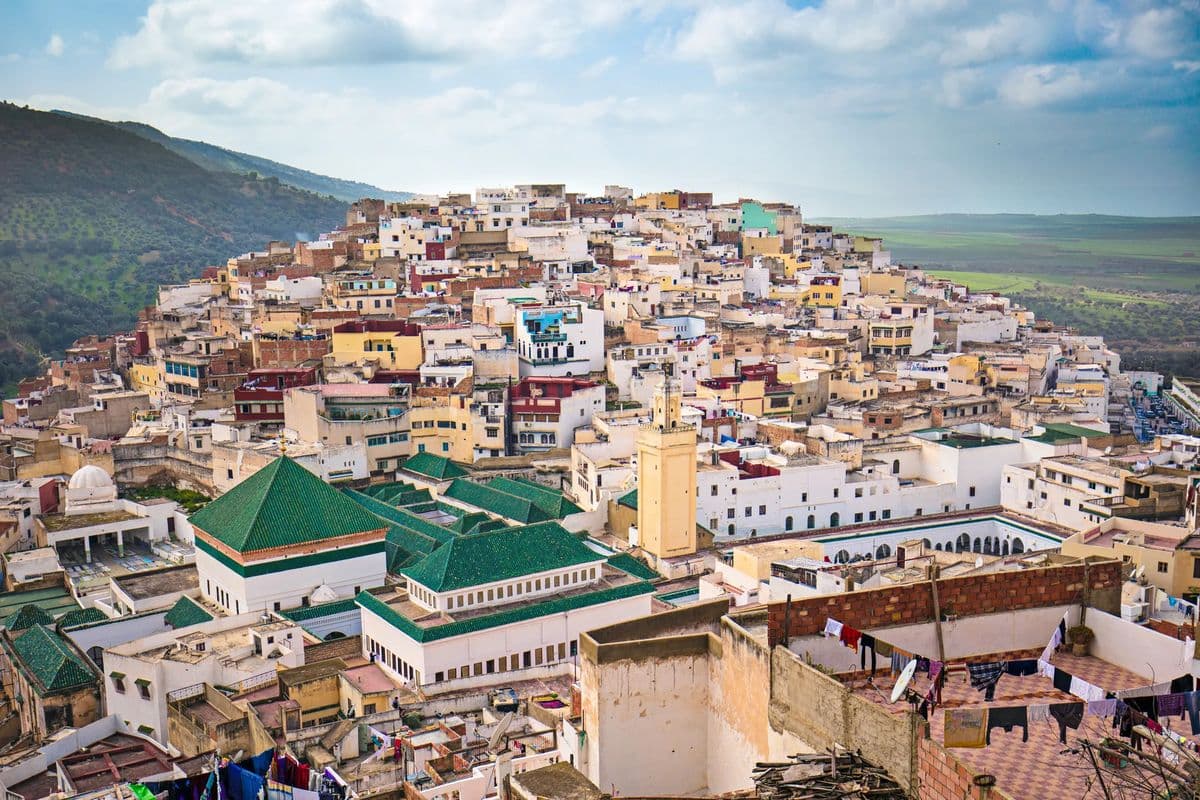
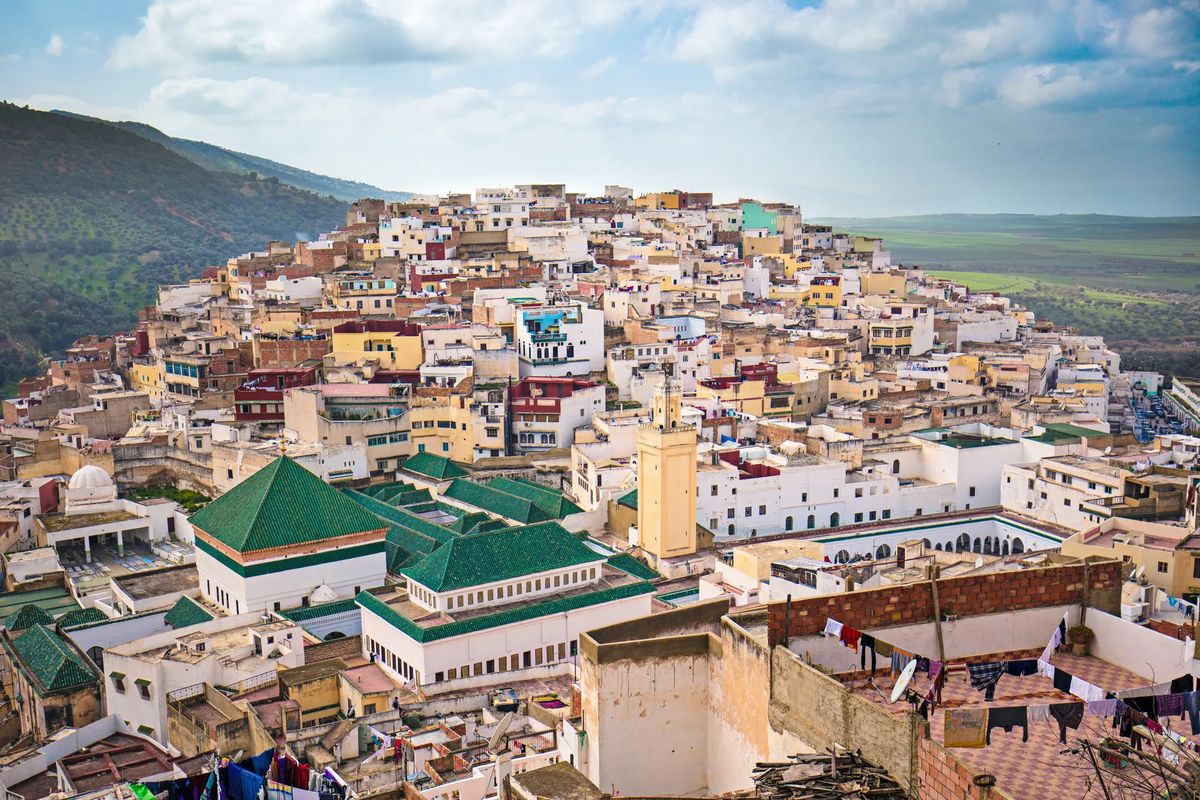
This hilltop town 4km from Volubilis is Morocco’s most sacred pilgrimage site, built around the tomb of the great-grandson of the Prophet Muhammad. The streets are narrow enough that delivery mules are still the primary mode of transport. The views over the surrounding countryside are extraordinary, especially in the late afternoon when the light turns everything gold.
There’s a handful of excellent guesthouses run by local families now. Staying overnight means waking up to the sound of the Fajr call echoing off the white walls — one of the more disorienting and beautiful experiences Morocco offers.
Don’t miss: The cylindrical minaret of the Idriss Mosque — the only round minaret in Morocco. You can’t enter, but you can stand close enough to read the Quranic verses inscribed in mosaic along its base.
Chefchaouen gets all the attention for its blue-painted streets, and it deserves it. But Asilah — a small walled coastal town 46km south of Tangier — offers something Chefchaouen no longer really can: the feeling of stumbling onto something.
Every August, Asilah hosts an international arts festival that turns the medina walls into an open-air gallery. Local and international artists paint murals directly onto the whitewashed buildings. By the time the next festival rolls around, some have faded, others been painted over — and new ones appear. The medina is permanently in a state of slow artistic transformation.
Outside of August, Asilah is genuinely quiet. The beaches north of town are clean and mostly empty on weekdays. The fish grilled at the small restaurants along the port wall costs a fraction of what you’d pay in Essaouira for something inferior.
Best time to visit: Either during the August festival (book accommodation months ahead) or in spring when the town is relaxed and the Atlantic is still cold enough to make the air crisp.
 You may have heard of Ouzoud. It appears in enough Morocco travel articles
to not quite qualify as hidden. But most tourists visit on weekends, arrive at
11am, photograph the falls with 200 strangers in the frame, and leave.
You may have heard of Ouzoud. It appears in enough Morocco travel articles
to not quite qualify as hidden. But most tourists visit on weekends, arrive at
11am, photograph the falls with 200 strangers in the frame, and leave.
Go on a Tuesday. Arrive before 9am.
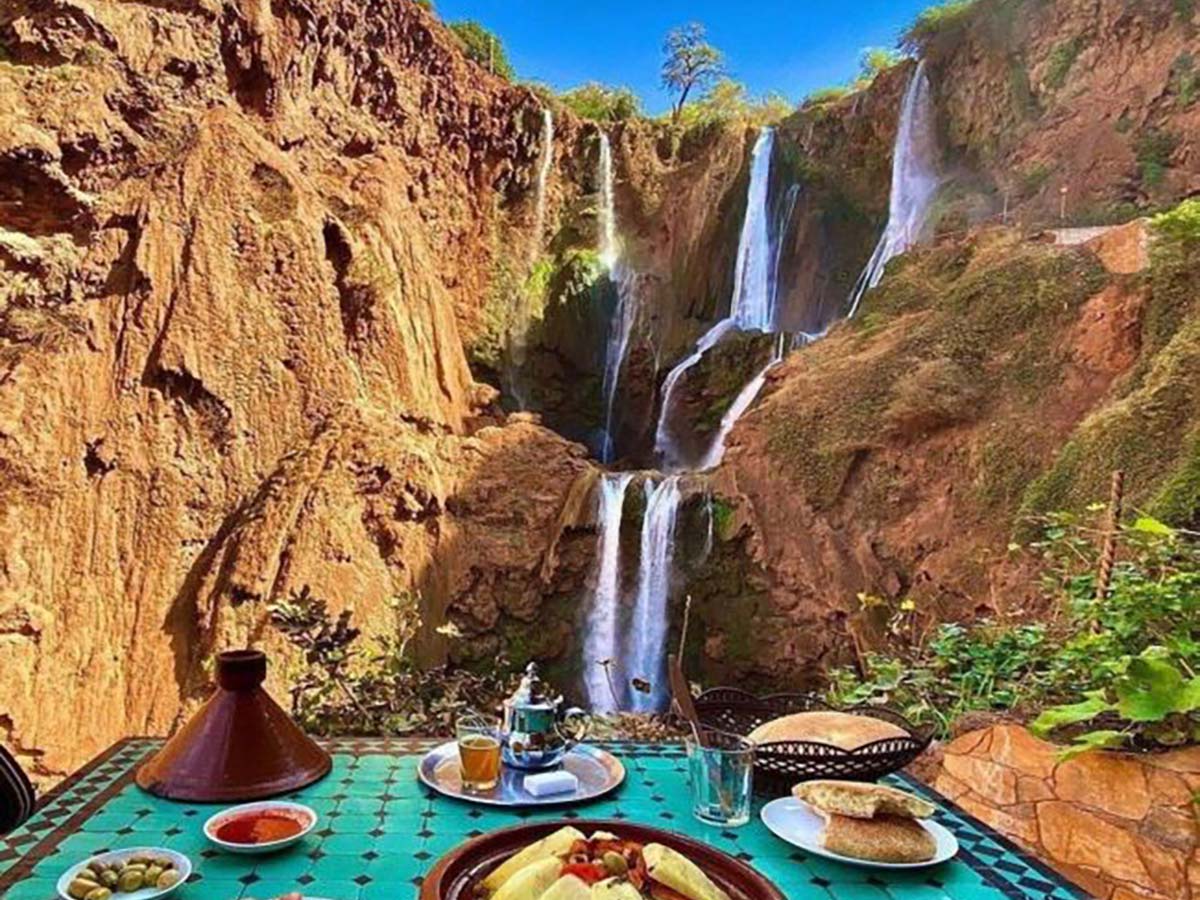
The falls drop 110 metres through red rock gorges covered in wild olive trees. Barbary macaques wander down from the cliffs to steal whatever you’ve left unattended. Local men in small wooden boats will row you close enough to the base that the spray soaks through everything. At the right hour, the mist catches the morning light and produces a full circular rainbow you can see from directly below.
It’s one of the genuinely spectacular natural sights in North Africa. It just requires a little timing to experience it without feeling like you’re in a theme park.
Getting there: 150km northeast of Marrakech — about 2.5 hours by road. Best combined with a stay in the Azilal region, which is covered next.
 The N508 road between Marrakech and Azilal passes through landscape that
looks like it was borrowed from another continent. The Aït Bou Goummez
Valley — sometimes called the “Happy Valley” by the few travelers who make
it there — sits at 1,800 metres altitude and is ringed by peaks that hold snow
well into May.
The N508 road between Marrakech and Azilal passes through landscape that
looks like it was borrowed from another continent. The Aït Bou Goummez
Valley — sometimes called the “Happy Valley” by the few travelers who make
it there — sits at 1,800 metres altitude and is ringed by peaks that hold snow
well into May.
There are no hotels here in the conventional sense. There are guesthouses run by Berber families who will feed you lamb tagine cooked over a wood fire, and whose children will follow you up any trail you attempt with the apparent goal of making sure you don’t get lost. Whether you want the company is another matter.
This is walking country. The trails that head toward the Mgoun massif are technically accessible to anyone in reasonable physical condition — no mountaineering experience required for the lower routes. What’s required is time. You need at least two nights to feel the valley rather than just pass through it.
Practical note: Mobile signal is limited to non-existent. Tell someone where you’re going. Bring cash — there are no ATMs.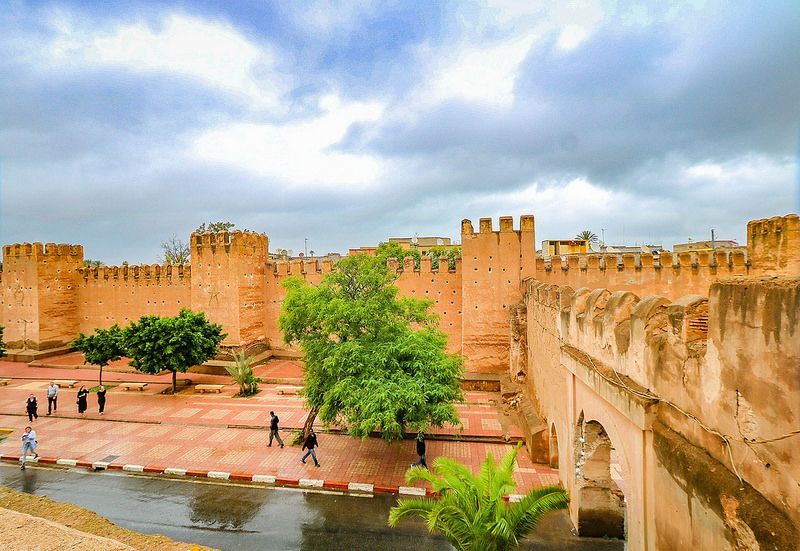 There’s a version of what Marrakech used to feel like before the riad renovation boom, before the Djemaa el-Fna food stalls started charging tourist prices,
before the moped tours and the henna ambushes.
There’s a version of what Marrakech used to feel like before the riad renovation boom, before the Djemaa el-Fna food stalls started charging tourist prices,
before the moped tours and the henna ambushes.
That version still exists, more or less, in Taroudant.
This walled city in the Souss Valley has complete 16th-century ramparts you can circumnavigate by bicycle in about an hour. The souks are functional rather than decorative — people actually buy their spices, fabric, and hardware here, which means prices reflect what things cost rather than what a tourist might pay. The central square on a Friday evening, when families spread out across the ground and children kick footballs between the café tables, is one of the more genuinely relaxed public spaces I’ve encountered in Morocco.
It’s two hours from Agadir. Almost nobody makes the detour.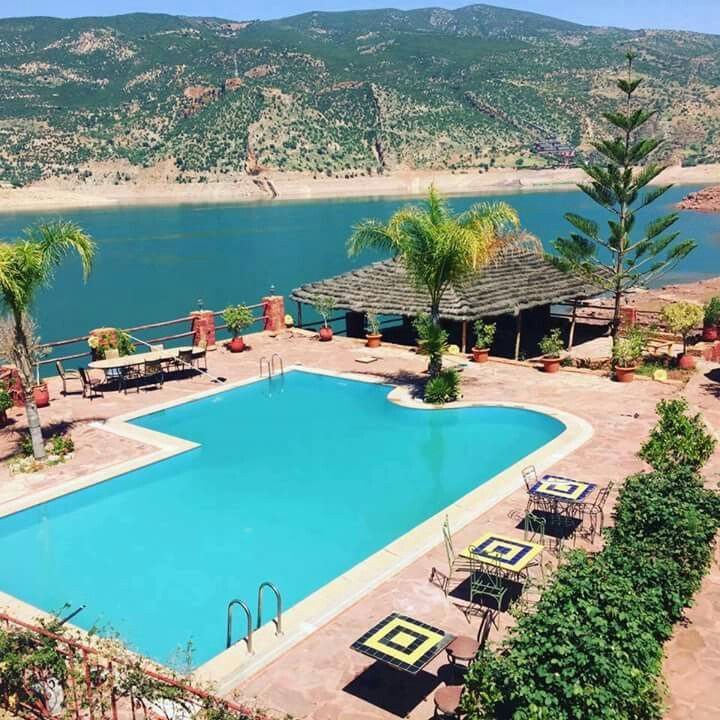 Morocco has a lake so strikingly blue it looks artificially colored in photographs,
and almost no travel writing mentions it.
Morocco has a lake so strikingly blue it looks artificially colored in photographs,
and almost no travel writing mentions it.
Bin el Ouidane, in the High Atlas foothills about 20km from Aït Attab, is a reservoir formed by one of Morocco’s largest dams. The water is a deep, unreal turquoise, surrounded by pale limestone cliffs and cedar-dotted hills. There are kayaks for rent from a small outfit near the main embankment. There is one good lakeside hotel. There are almost no other tourists.
On still mornings, the surface reflects the surrounding landscape so precisely that photographs look like they’ve been mirrored in post-processing.
Combine with: Ouzoud Falls is 35km away. Bin el Ouidane works perfectly as an overnight stop between Marrakech and the falls.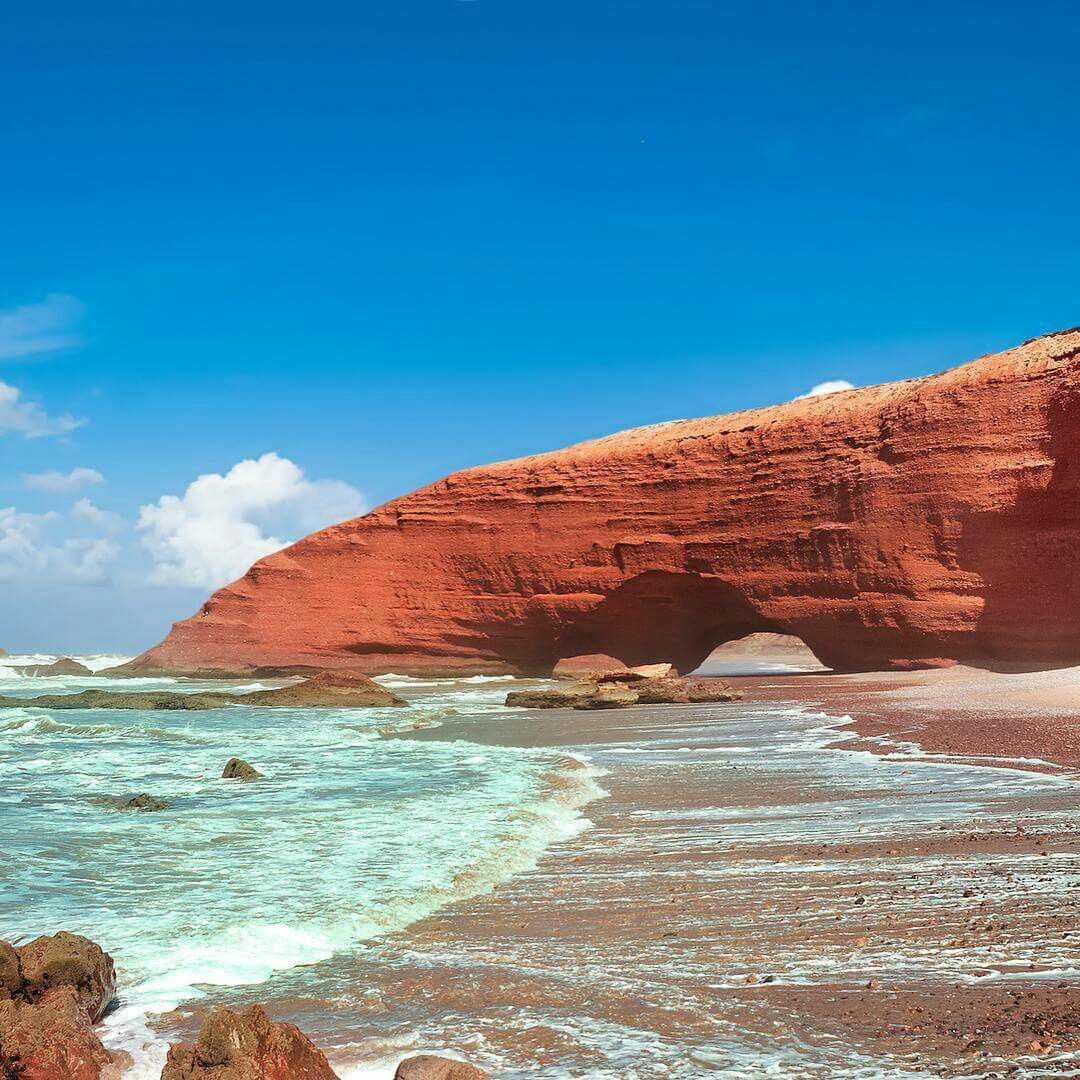 In 1969, Spain returned the coastal enclave of Sidi Ifni to Morocco after decades
of colonial administration. Unlike most colonial-era buildings across Africa, the
Spanish architecture here was kept rather than demolished — and has since
been left largely alone.
In 1969, Spain returned the coastal enclave of Sidi Ifni to Morocco after decades
of colonial administration. Unlike most colonial-era buildings across Africa, the
Spanish architecture here was kept rather than demolished — and has since
been left largely alone.
The result is a surreal small city where Moorish arches meet 1930s Art Deco facades, where a former consulate building has been converted into a municipal courthouse, where the streets are wide and straight in the Spanish style but the calls to prayer echo between buildings designed by architects who never imagined hearing them.
The town sits above Atlantic cliffs. The beach to the north is long, exposed, and beloved by surfers who’ve been quietly coming here for years without broadcasting the fact. In the evenings, the waterfront promenade empties early and the town returns to itself.
Best month to visit: April or October — the anti-Atlas light is extraordinary and the wind is manageable.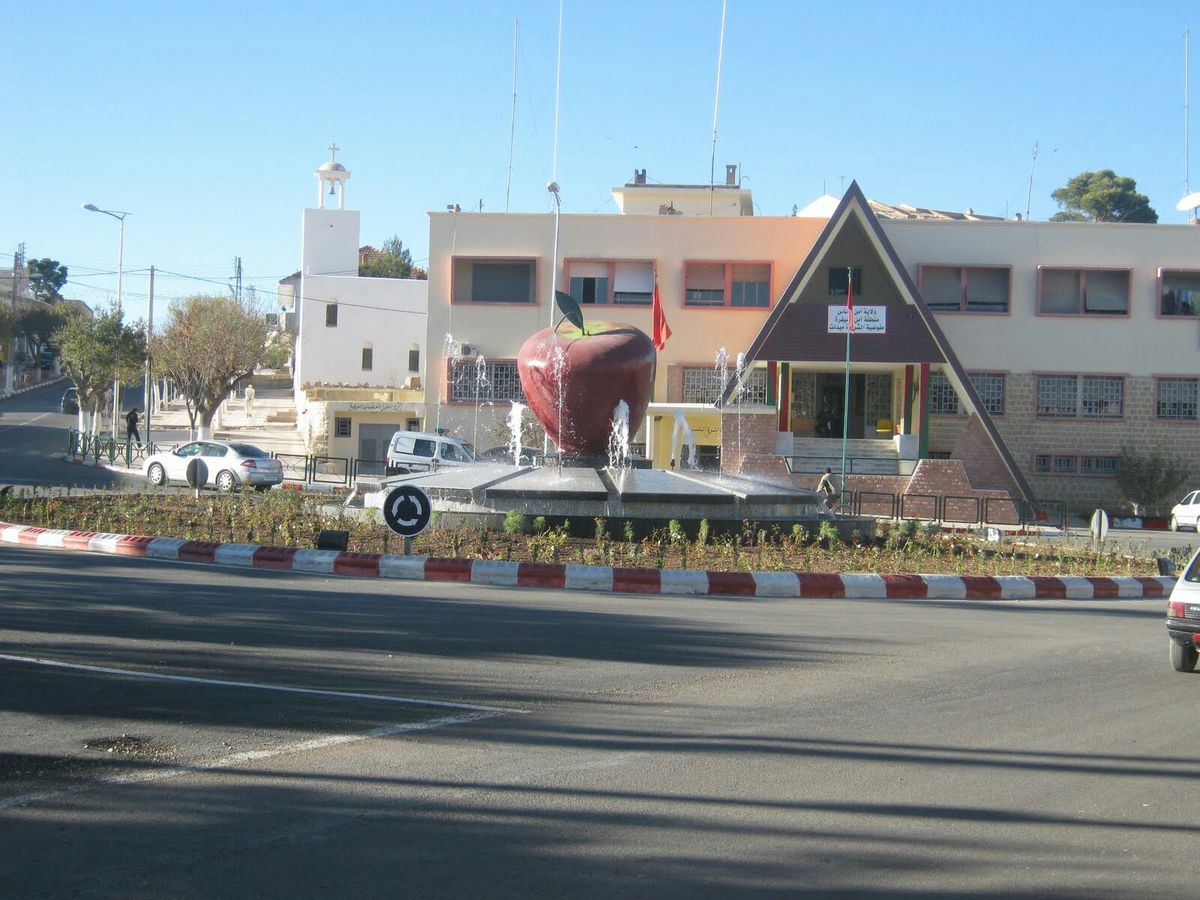 The road between Fes and Erfoud passes through Midelt — a market town in
the Middle Atlas that most tourists experience as a lunch stop. Which is a
shame, because the surrounding area is genuinely remarkable.
The road between Fes and Erfoud passes through Midelt — a market town in
the Middle Atlas that most tourists experience as a lunch stop. Which is a
shame, because the surrounding area is genuinely remarkable.
The Cirque de Jaffar, a loop road through the highlands above Midelt, passes through apple orchards, juniper scrub, and eventually arrives at open plateau where Barbary macaques — the same species as at Ouzoud — sit by the roadside with the confidence of animals that have never been seriously threatened.
Further north, the cedar forest around Azrou is one of the last significant cedar forests in North Africa. Ancient trees several metres in circumference stand in groves that feel primordially quiet. The macaques here are habituated to humans and will climb onto your car if you park and open the windows.
Note : Don’t feed the macaques. It’s genuinely harmful to them, even though every instinct says otherwise.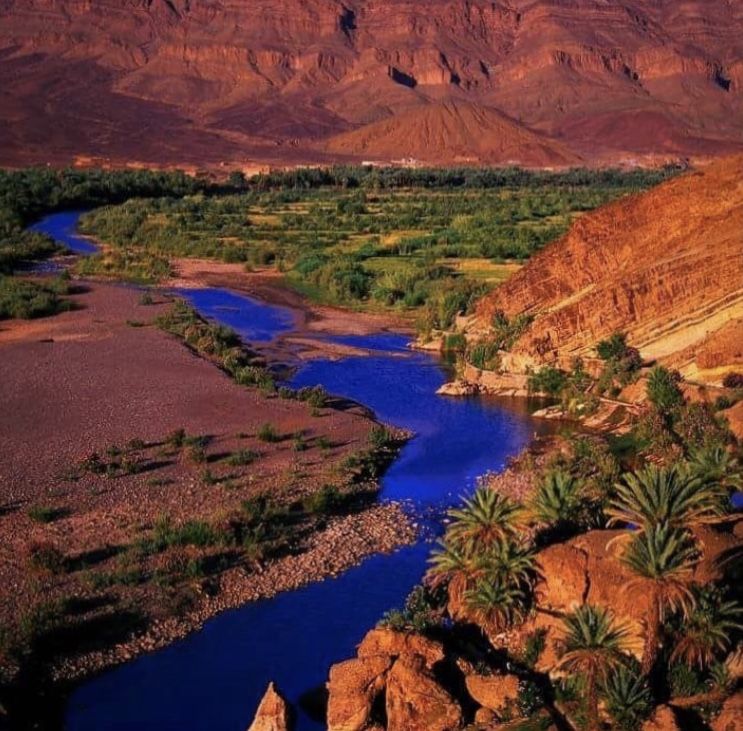 This is less a place than a timing recommendation. The Draa Valley — the
long palm-lined river valley that runs south from Ouarzazate toward Zagora
and eventually the Sahara — is well-documented in travel guides. But almost
nothing is written about what it’s like after dark.
This is less a place than a timing recommendation. The Draa Valley — the
long palm-lined river valley that runs south from Ouarzazate toward Zagora
and eventually the Sahara — is well-documented in travel guides. But almost
nothing is written about what it’s like after dark.
Morocco has some of the lowest light pollution in the Mediterranean region once you’re south of the Atlas. In the Draa Valley on a clear night, far from any town, the Milky Way is visible in its full breadth from horizon to horizon. The silence is complete. The date palms become black silhouettes against a sky that looks like someone spilled salt across dark fabric.
If your itinerary takes you through this valley, build in a stop somewhere between Agdz and Zagora after nightfall. Get out of the car. Wait five minutes for your eyes to adjust.
You’ll understand why people have been telling stories about these skies for centuries.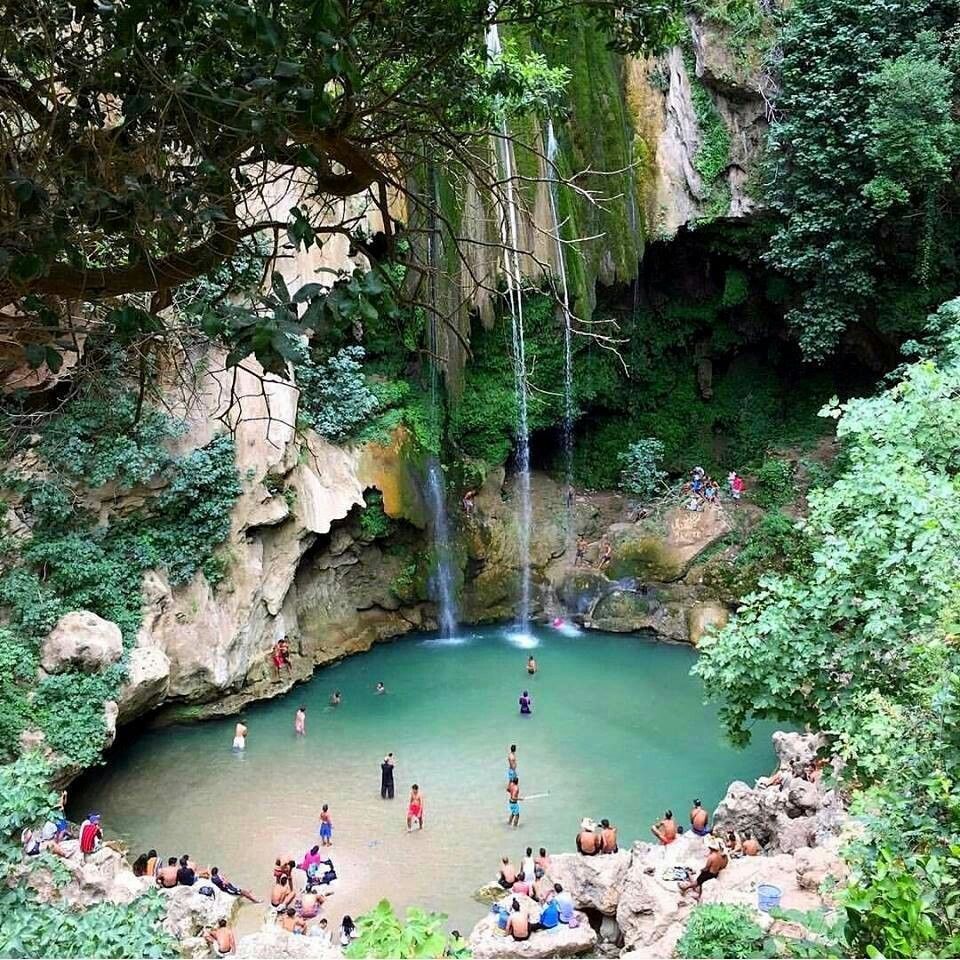 Chefchaouen itself is beautiful and worth a visit. But the Rif Mountain valleys
immediately surrounding it receive a fraction of the foot traffic of the medina
and are, in certain respects, more interesting.
Chefchaouen itself is beautiful and worth a visit. But the Rif Mountain valleys
immediately surrounding it receive a fraction of the foot traffic of the medina
and are, in certain respects, more interesting.
The trail to Ras el-Maa — the natural spring above town — is well-worn but quickly thins out as you continue east into the Talassemtane National Park. The forest here is a mix of Moroccan fir, cedar, and wild olive. There are Barbary macaques (yes, again — they are everywhere in the Moroccan highlands). There are also views back over the town that are considerably better than any you’ll get from within it.
A 2-hour walk in any direction from Chefchaouen deposits you in a landscape that has no relationship to the selfie economy operating below.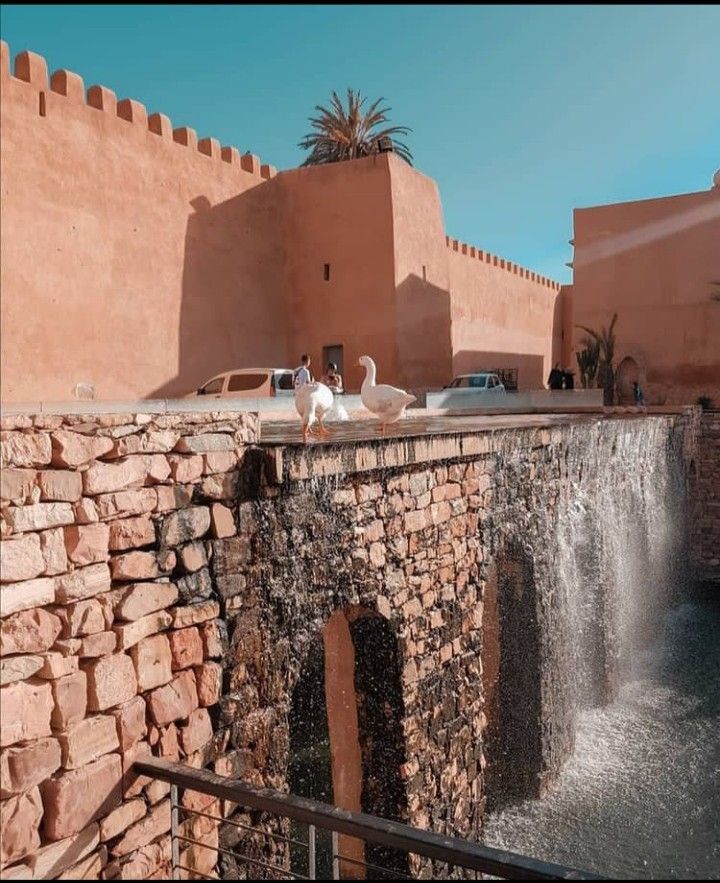 Tiznit is a market town in the Anti-Atlas, 90km south of Agadir. It has one
compelling reason to visit: it is the center of Morocco’s silver jewelry tradition,
with a medina silversmith district that has been operating for generations.
Tiznit is a market town in the Anti-Atlas, 90km south of Agadir. It has one
compelling reason to visit: it is the center of Morocco’s silver jewelry tradition,
with a medina silversmith district that has been operating for generations.
The craftsmen here — many of whom learned from their fathers and grandfathers — work in small workshops barely larger than a corridor, producing pieces that reflect a distinctly southern Moroccan aesthetic different from the Fes or Marrakech traditions. Chunky Berber bracelets. Fibulas worn to clasp clothing. Pendants set with coral, amber resin, and stones whose names I’ve never successfully translated.
Prices are considerably lower than anywhere you’ll find the same work sold in tourist contexts. More importantly, you’re buying from the people who made it.
Practical tip: The souk is most active on Thursday mornings, when sellers come in from surrounding villages.
What I can tell you is that each of these places has something the obvious itinerary doesn’t offer: the feeling that you’re seeing something as it is, rather than as it’s been arranged for you to see it.
That feeling is harder to plan for than any landmark. But it’s what people remember.
It’s the detour you took because the road looked interesting. The town your driver mentioned offhand. The valley you stopped in because someone needed a bathroom break and you ended up staying for two hours.
This list is my attempt to bottle some of that. These are places I’ve taken clients who asked for something different — people who’d already done Marrakech, or who simply wanted to avoid the selfie crowds. Not one of these places is a secret to Moroccans. But to most foreign visitors, they might as well be.
1. Aït Benhaddou’s Quieter Cousin: Aït Benhaddou at Dawn (or Tamnougalt)
Everyone goes to Aït Benhaddou — and yes, it’s worth seeing. But if you want
the same ancient kasbahs without a single tour bus in sight, drive 20 minutes
further down the Draa Valley to Tamnougalt.This fortified village has been continuously inhabited for over 500 years. It appeared in several films shot in the region, but nobody talks about it. The guardian — an elderly man named Hassan when I last visited — will walk you through rooms where Jewish merchants traded spices, past grain stores still used today, through corridors so narrow two people can’t pass each other without turning sideways.
No entrance fee. No souvenir stalls outside. Just a living kasbah that happens to let you in.
How to get there: 12km south of Agdz on the N9 road heading toward Zagora. You’ll miss it if you’re not looking — it’s the cluster of mud towers on the left, just before the road bends.
2. Moulay Idriss Zerhoun — The Town That Didn’t Allow Overnight Guests Until 2005
Until relatively recently, non-Muslims were not permitted to spend the night in
Moulay Idriss Zerhoun. The rule was eventually lifted, but the town never quiteadjusted to tourism the way other Moroccan cities did — which is precisely why you should go.This hilltop town 4km from Volubilis is Morocco’s most sacred pilgrimage site, built around the tomb of the great-grandson of the Prophet Muhammad. The streets are narrow enough that delivery mules are still the primary mode of transport. The views over the surrounding countryside are extraordinary, especially in the late afternoon when the light turns everything gold.
There’s a handful of excellent guesthouses run by local families now. Staying overnight means waking up to the sound of the Fajr call echoing off the white walls — one of the more disorienting and beautiful experiences Morocco offers.
Don’t miss: The cylindrical minaret of the Idriss Mosque — the only round minaret in Morocco. You can’t enter, but you can stand close enough to read the Quranic verses inscribed in mosaic along its base.
3. The Blue City That Isn’t Chefchaouen: Asilah
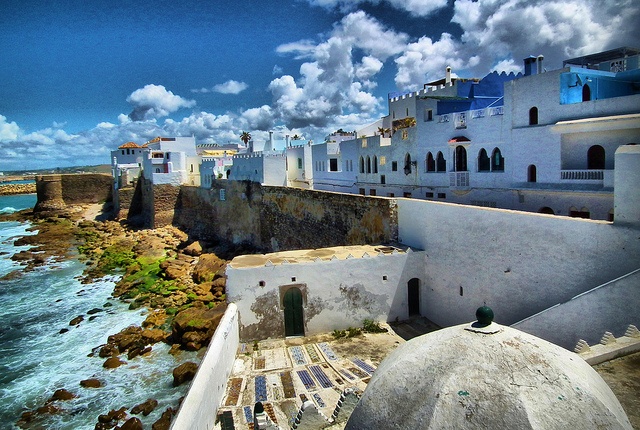
Chefchaouen gets all the attention for its blue-painted streets, and it deserves it. But Asilah — a small walled coastal town 46km south of Tangier — offers something Chefchaouen no longer really can: the feeling of stumbling onto something.
Every August, Asilah hosts an international arts festival that turns the medina walls into an open-air gallery. Local and international artists paint murals directly onto the whitewashed buildings. By the time the next festival rolls around, some have faded, others been painted over — and new ones appear. The medina is permanently in a state of slow artistic transformation.
Outside of August, Asilah is genuinely quiet. The beaches north of town are clean and mostly empty on weekdays. The fish grilled at the small restaurants along the port wall costs a fraction of what you’d pay in Essaouira for something inferior.
Best time to visit: Either during the August festival (book accommodation months ahead) or in spring when the town is relaxed and the Atlantic is still cold enough to make the air crisp.
4. Ouzoud Falls — But Go On a Tuesday
You may have heard of Ouzoud. It appears in enough Morocco travel articles
to not quite qualify as hidden. But most tourists visit on weekends, arrive at
11am, photograph the falls with 200 strangers in the frame, and leave.Go on a Tuesday. Arrive before 9am.
The falls drop 110 metres through red rock gorges covered in wild olive trees. Barbary macaques wander down from the cliffs to steal whatever you’ve left unattended. Local men in small wooden boats will row you close enough to the base that the spray soaks through everything. At the right hour, the mist catches the morning light and produces a full circular rainbow you can see from directly below.
It’s one of the genuinely spectacular natural sights in North Africa. It just requires a little timing to experience it without feeling like you’re in a theme park.
Getting there: 150km northeast of Marrakech — about 2.5 hours by road. Best combined with a stay in the Azilal region, which is covered next.
5. The Azilal Region and the Road Nobody Takes
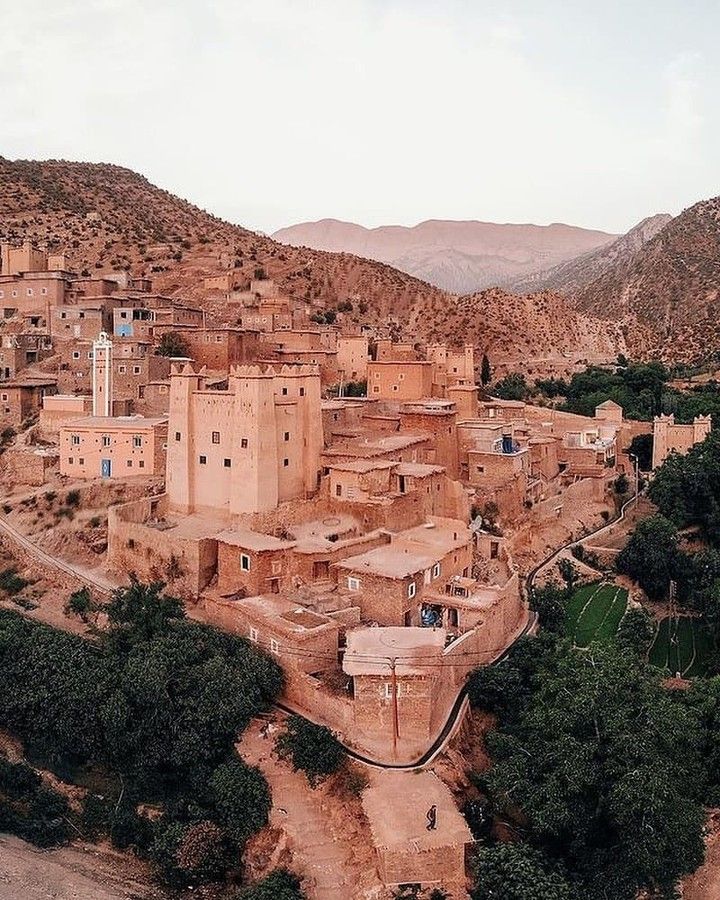
The N508 road between Marrakech and Azilal passes through landscape that
looks like it was borrowed from another continent. The Aït Bou Goummez
Valley — sometimes called the “Happy Valley” by the few travelers who make
it there — sits at 1,800 metres altitude and is ringed by peaks that hold snow
well into May.There are no hotels here in the conventional sense. There are guesthouses run by Berber families who will feed you lamb tagine cooked over a wood fire, and whose children will follow you up any trail you attempt with the apparent goal of making sure you don’t get lost. Whether you want the company is another matter.
This is walking country. The trails that head toward the Mgoun massif are technically accessible to anyone in reasonable physical condition — no mountaineering experience required for the lower routes. What’s required is time. You need at least two nights to feel the valley rather than just pass through it.
Practical note: Mobile signal is limited to non-existent. Tell someone where you’re going. Bring cash — there are no ATMs.
6. Taroudant — Marrakech Before Marrakech Was Marrakech
There’s a version of what Marrakech used to feel like before the riad renovation boom, before the Djemaa el-Fna food stalls started charging tourist prices,
before the moped tours and the henna ambushes.That version still exists, more or less, in Taroudant.
This walled city in the Souss Valley has complete 16th-century ramparts you can circumnavigate by bicycle in about an hour. The souks are functional rather than decorative — people actually buy their spices, fabric, and hardware here, which means prices reflect what things cost rather than what a tourist might pay. The central square on a Friday evening, when families spread out across the ground and children kick footballs between the café tables, is one of the more genuinely relaxed public spaces I’ve encountered in Morocco.
It’s two hours from Agadir. Almost nobody makes the detour.
7. Bin el Ouidane Reservoir
Morocco has a lake so strikingly blue it looks artificially colored in photographs,
and almost no travel writing mentions it.Bin el Ouidane, in the High Atlas foothills about 20km from Aït Attab, is a reservoir formed by one of Morocco’s largest dams. The water is a deep, unreal turquoise, surrounded by pale limestone cliffs and cedar-dotted hills. There are kayaks for rent from a small outfit near the main embankment. There is one good lakeside hotel. There are almost no other tourists.
On still mornings, the surface reflects the surrounding landscape so precisely that photographs look like they’ve been mirrored in post-processing.
Combine with: Ouzoud Falls is 35km away. Bin el Ouidane works perfectly as an overnight stop between Marrakech and the falls.
8. Sidi Ifni — The Spanish Town Morocco Kept
In 1969, Spain returned the coastal enclave of Sidi Ifni to Morocco after decades
of colonial administration. Unlike most colonial-era buildings across Africa, the
Spanish architecture here was kept rather than demolished — and has since
been left largely alone.The result is a surreal small city where Moorish arches meet 1930s Art Deco facades, where a former consulate building has been converted into a municipal courthouse, where the streets are wide and straight in the Spanish style but the calls to prayer echo between buildings designed by architects who never imagined hearing them.
The town sits above Atlantic cliffs. The beach to the north is long, exposed, and beloved by surfers who’ve been quietly coming here for years without broadcasting the fact. In the evenings, the waterfront promenade empties early and the town returns to itself.
Best month to visit: April or October — the anti-Atlas light is extraordinary and the wind is manageable.
9. Midelt and the Cedar Forests of Azrou
The road between Fes and Erfoud passes through Midelt — a market town in
the Middle Atlas that most tourists experience as a lunch stop. Which is a
shame, because the surrounding area is genuinely remarkable.The Cirque de Jaffar, a loop road through the highlands above Midelt, passes through apple orchards, juniper scrub, and eventually arrives at open plateau where Barbary macaques — the same species as at Ouzoud — sit by the roadside with the confidence of animals that have never been seriously threatened.
Further north, the cedar forest around Azrou is one of the last significant cedar forests in North Africa. Ancient trees several metres in circumference stand in groves that feel primordially quiet. The macaques here are habituated to humans and will climb onto your car if you park and open the windows.
Note : Don’t feed the macaques. It’s genuinely harmful to them, even though every instinct says otherwise.
10. The Draa Valley at Night
This is less a place than a timing recommendation. The Draa Valley — the
long palm-lined river valley that runs south from Ouarzazate toward Zagora
and eventually the Sahara — is well-documented in travel guides. But almost
nothing is written about what it’s like after dark.Morocco has some of the lowest light pollution in the Mediterranean region once you’re south of the Atlas. In the Draa Valley on a clear night, far from any town, the Milky Way is visible in its full breadth from horizon to horizon. The silence is complete. The date palms become black silhouettes against a sky that looks like someone spilled salt across dark fabric.
If your itinerary takes you through this valley, build in a stop somewhere between Agdz and Zagora after nightfall. Get out of the car. Wait five minutes for your eyes to adjust.
You’ll understand why people have been telling stories about these skies for centuries.
11. Chefchaouen’s Surrounding Valleys (Not the Blue Medina)
Chefchaouen itself is beautiful and worth a visit. But the Rif Mountain valleys
immediately surrounding it receive a fraction of the foot traffic of the medina
and are, in certain respects, more interesting.The trail to Ras el-Maa — the natural spring above town — is well-worn but quickly thins out as you continue east into the Talassemtane National Park. The forest here is a mix of Moroccan fir, cedar, and wild olive. There are Barbary macaques (yes, again — they are everywhere in the Moroccan highlands). There are also views back over the town that are considerably better than any you’ll get from within it.
A 2-hour walk in any direction from Chefchaouen deposits you in a landscape that has no relationship to the selfie economy operating below.
12. Tiznit — Silver Jewelry Capital of Morocco, and Almost Nothing Else
Tiznit is a market town in the Anti-Atlas, 90km south of Agadir. It has one
compelling reason to visit: it is the center of Morocco’s silver jewelry tradition,
with a medina silversmith district that has been operating for generations.The craftsmen here — many of whom learned from their fathers and grandfathers — work in small workshops barely larger than a corridor, producing pieces that reflect a distinctly southern Moroccan aesthetic different from the Fes or Marrakech traditions. Chunky Berber bracelets. Fibulas worn to clasp clothing. Pendants set with coral, amber resin, and stones whose names I’ve never successfully translated.
Prices are considerably lower than anywhere you’ll find the same work sold in tourist contexts. More importantly, you’re buying from the people who made it.
Practical tip: The souk is most active on Thursday mornings, when sellers come in from surrounding villages.
A Final Note on “Off the Beaten Path”
I want to be honest about something. Every place on this list will eventually become more visited as travel writing about Morocco expands. Some of them — Ouzoud, Moulay Idriss, Asilah — are already known to a certain kind of traveler. “Hidden” is a relative term that has a shelf life.What I can tell you is that each of these places has something the obvious itinerary doesn’t offer: the feeling that you’re seeing something as it is, rather than as it’s been arranged for you to see it.
That feeling is harder to plan for than any landmark. But it’s what people remember.