
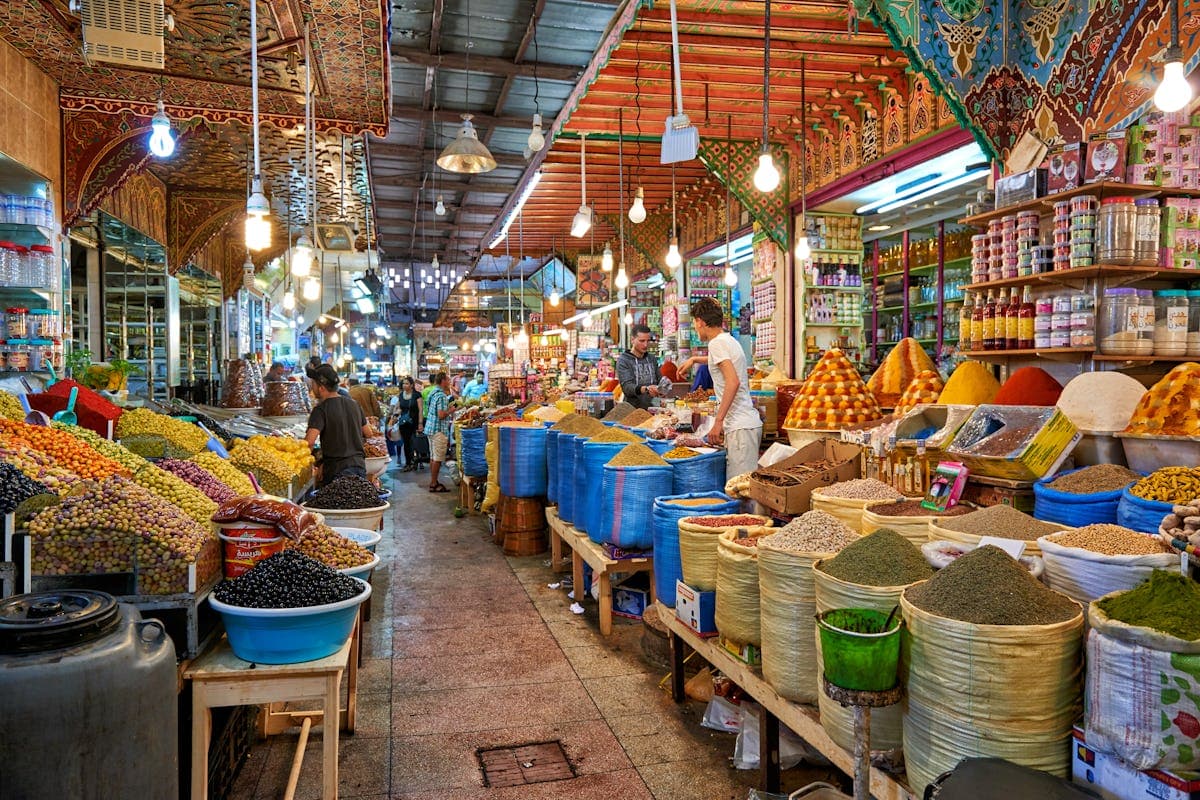
Start a culinary adventure in Morocco, where Moroccan cuisine shines in its street food. Walking through the lively markets, you'll find a variety of tasty dishes. These dishes show off the country's rich culture and delight your taste buds.
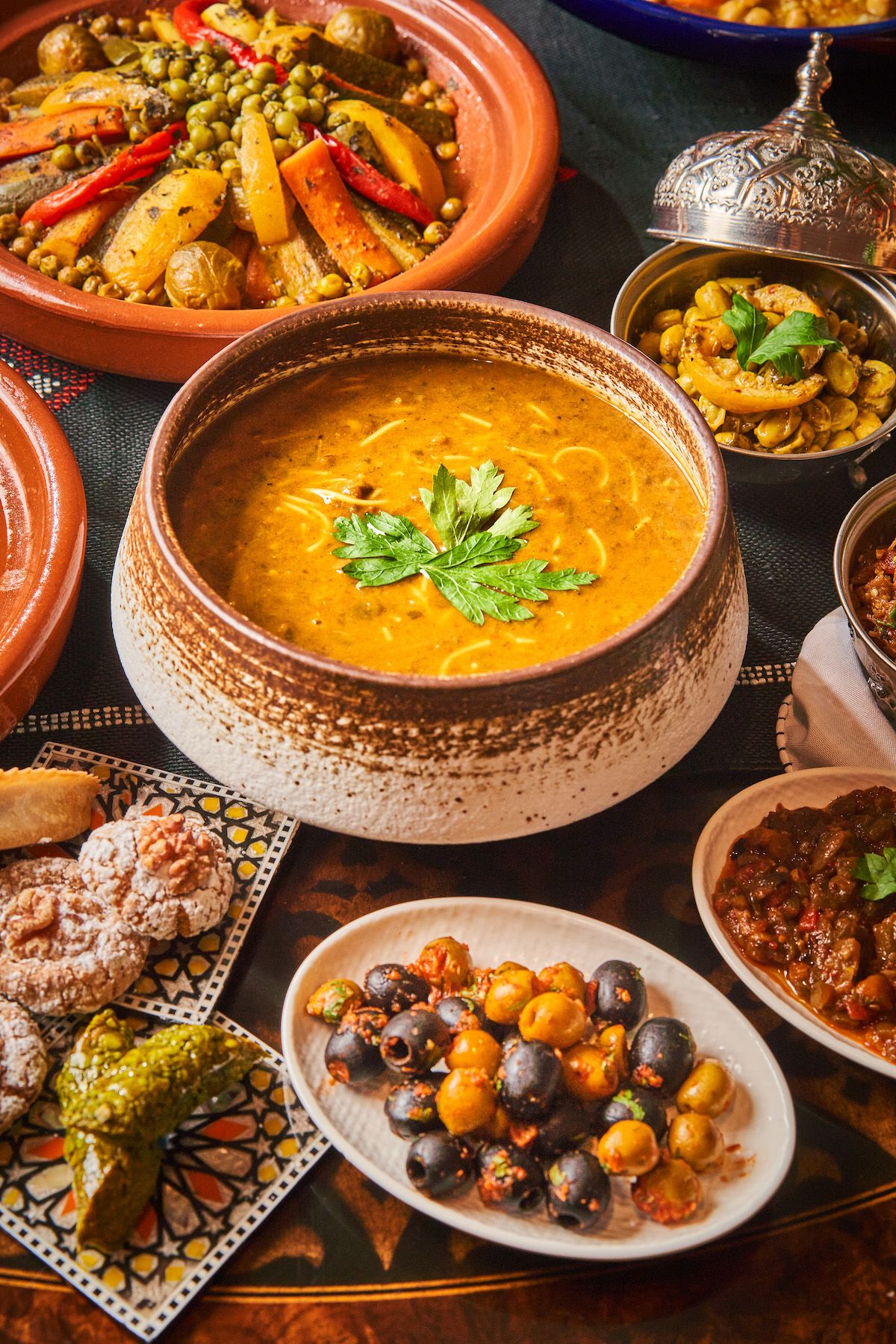 Explore everything from savory tagines to sweet pastries. This guide will show you the top dishes to try. You'll learn how to shop like a local and enjoy the real flavors of Morocco.
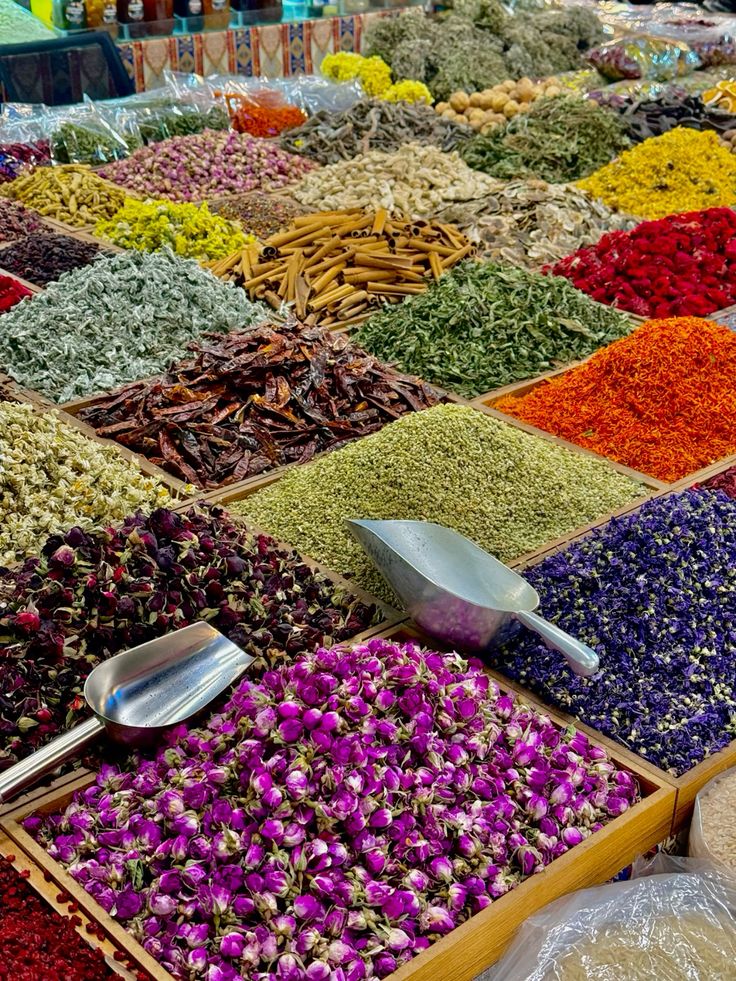 Spices and seasonings are key in Moroccan cooking, adding depth and complexity. They're not just for flavor; they carry cultural and historical weight.
• Cumin and coriander for earthy flavors
• Cinnamon and ginger for warmth
• Turmeric for its vibrant color and health benefits
• Tagine: a slow-cooked stew cooked in an earthenware pot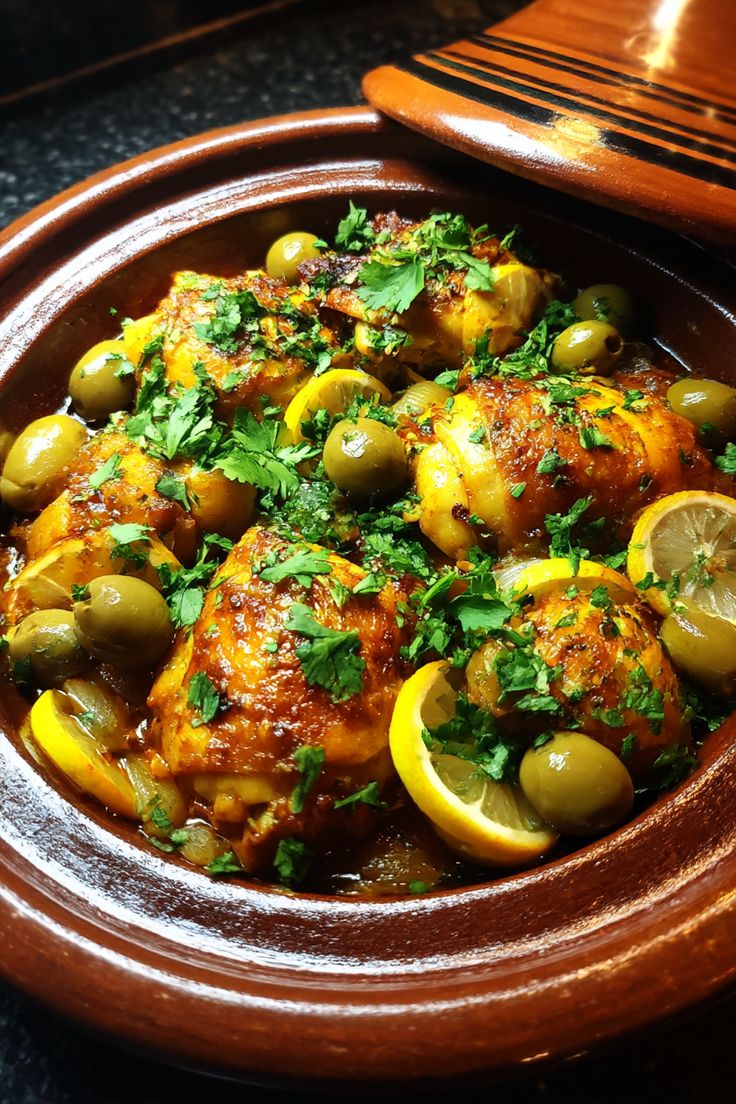
• Khobz: traditional Moroccan bread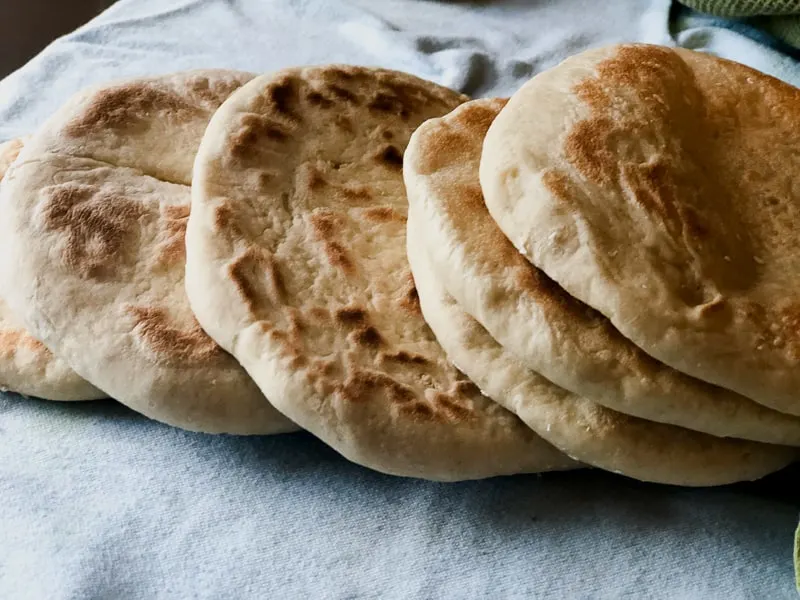
• Harira: a hearty soup with tomatoes, lentils, and chickpeas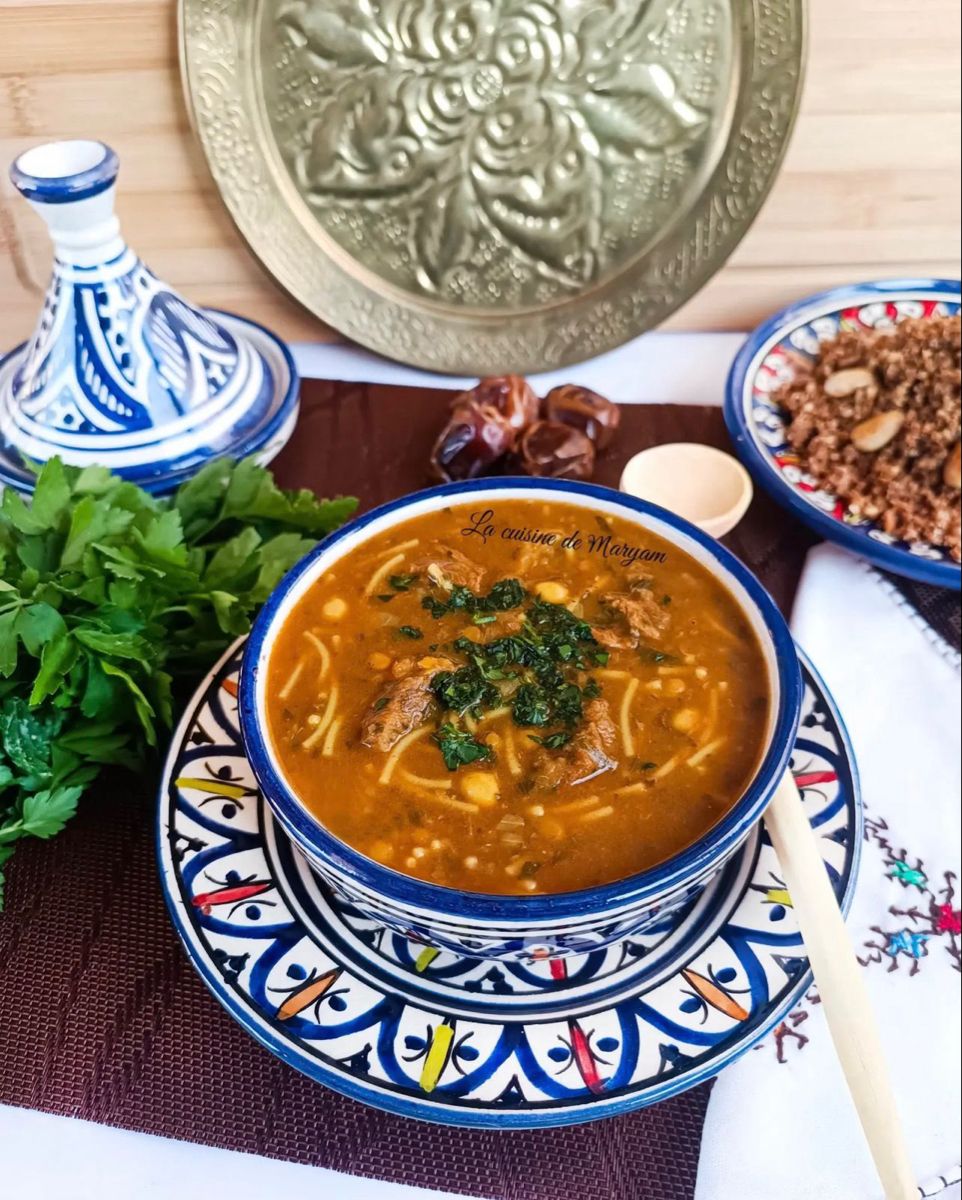
• Chicken tagine with preserved lemons and olives
• Lamb tagine with prunes and almonds
• Fish tagine with tomatoes and spices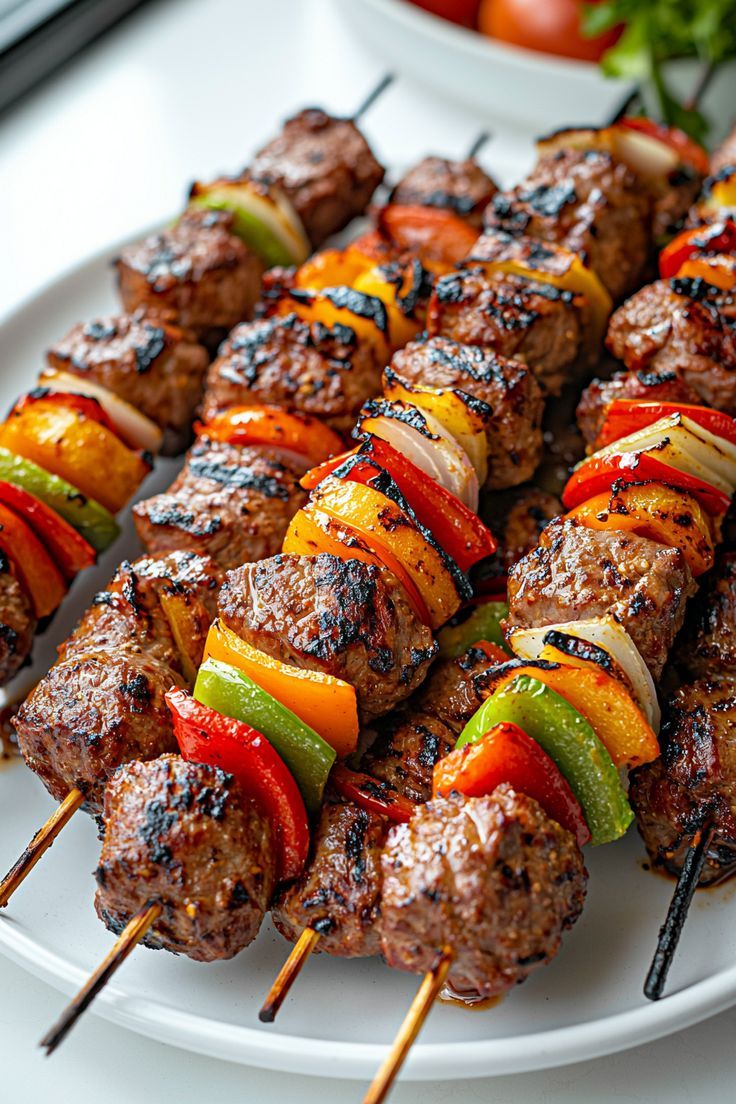 Grilled meats are big in Moroccan street food. Vendors use skewers to cook marinated meats over flames. Kebabs are loved by both locals and tourists for their taste and filling nature.
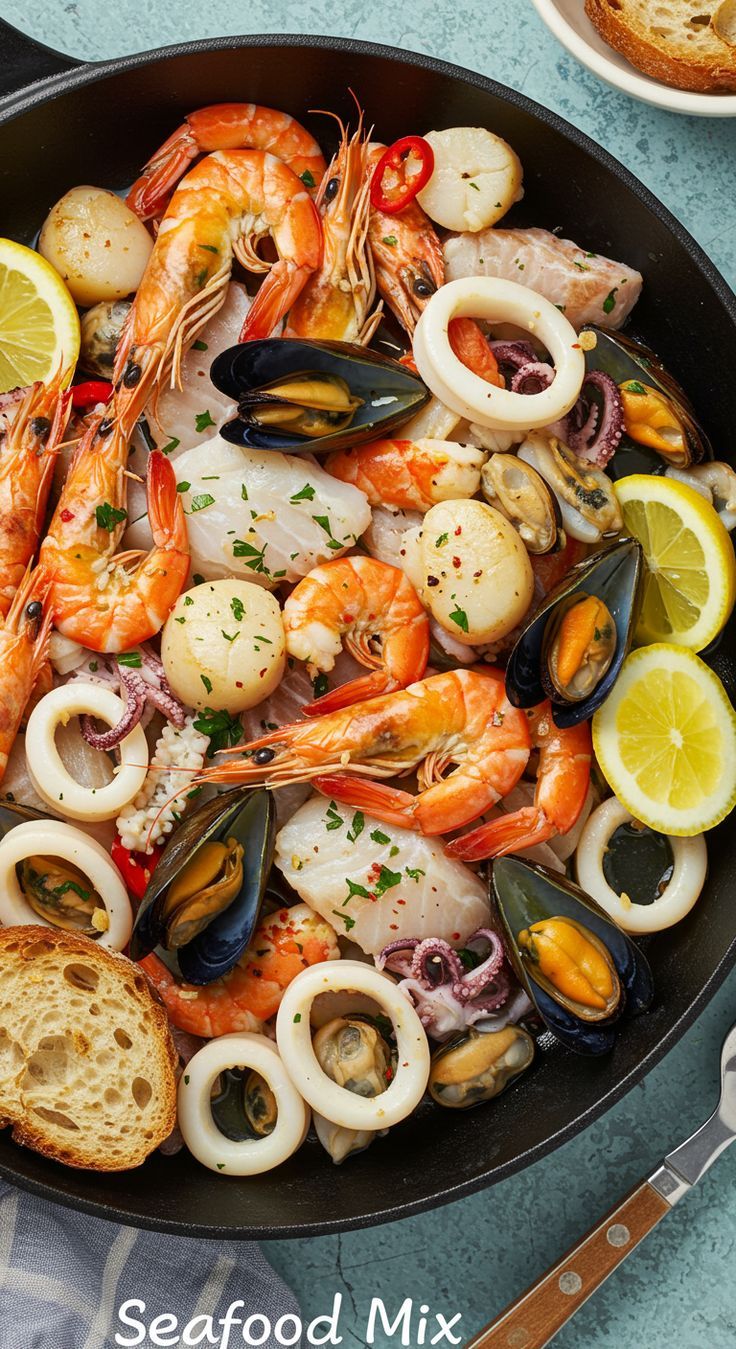 The freshness of the seafood is a hallmark of Moroccan coastal cuisine, making it a must-try when visiting these regions.
• Meat and vegetable skewers wrapped in khobz
• Cheese and herb sandwiches, perfect for a quick snack
• Spicy tuna or sardine sandwiches, reflecting the coastal influences on Moroccan cuisine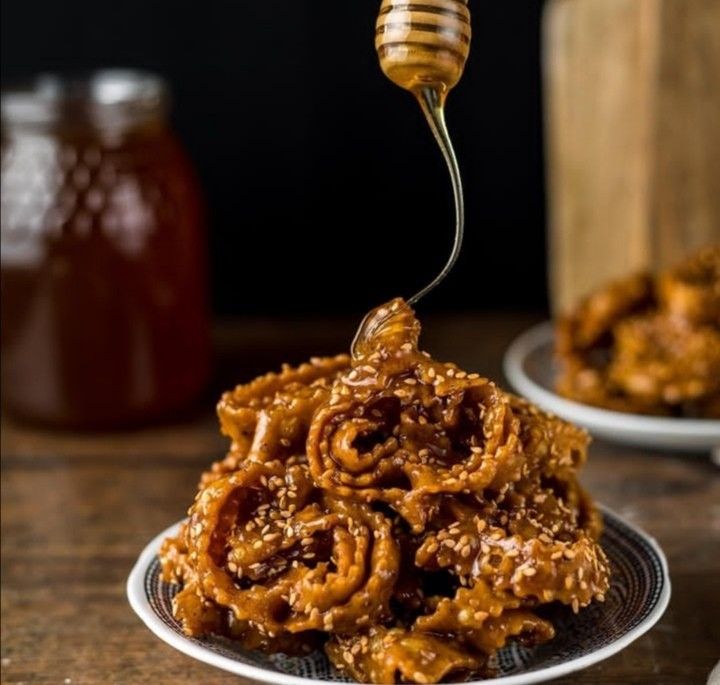 Don't miss out on Chebakia, a honey-soaked pastry, and Briouat, a flaky pastry filled with nuts or cream. These desserts are not just tasty but also give a peek into Morocco's rich culinary history. You'll also find makroud, a date-filled pastry, and ghriba, a shortbread-like cookie.
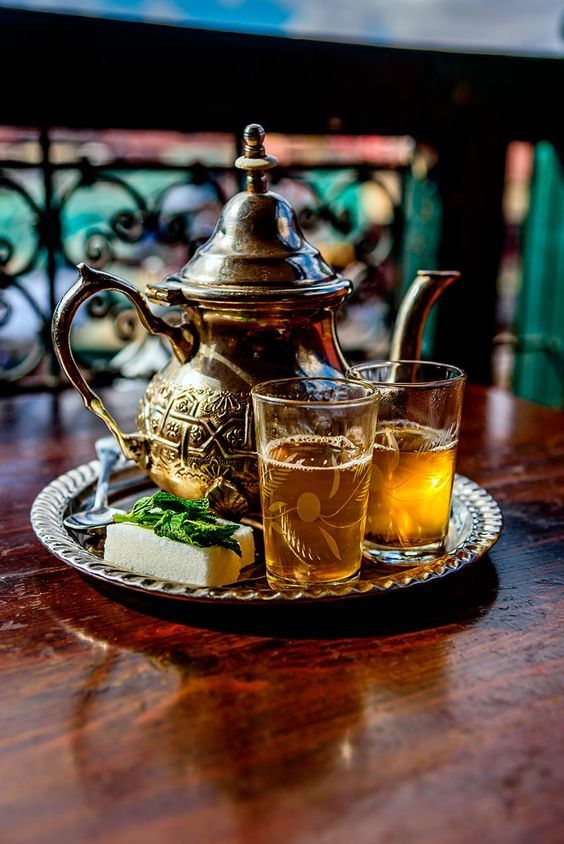 Mint tea is a key part of Moroccan hospitality. Its making is seen as an art. The tea uses green tea, fresh mint, and sugar, served in fancy glasses.
Preparing and serving mint tea is a ritual. It brings people together, creating a sense of community and warmth.
Mint tea is a key part of Moroccan hospitality. Its making is seen as an art. The tea uses green tea, fresh mint, and sugar, served in fancy glasses.
Preparing and serving mint tea is a ritual. It brings people together, creating a sense of community and warmth.
• Arrive early: Get there early to avoid crowds and heat.
• Be prepared to haggle: Haggling is common, so be ready to talk prices.
• Try before you buy: Many vendors offer samples, so try before you buy. Follow these tips and be open to new things. You'll navigate Morocco's food markets like a pro. And you'll enjoy the delicious food this country offers.
• Northern Region: Seafood paella, grilled fish
• Southern Region: Tagine with preserved lemons, argane oil-based dishes
• Coastal Region: Grilled sardines, fried fish
• Inland Region: Kebabs, slow-cooked stews Knowing about these regional differences can make your food experience in Morocco better. It lets you see the variety and richness of its street food.
Explore everything from savory tagines to sweet pastries. This guide will show you the top dishes to try. You'll learn how to shop like a local and enjoy the real flavors of Morocco.
The Rich Heritage of Moroccan Street Food
The flavors and aromas of Moroccan street food tell a story of a rich past. As you explore Morocco's vibrant streets, you'll see its cuisine reflects its diverse Moroccan history and cultural heritage.Historical Influences on Moroccan Cuisine
Moroccan cuisine has been shaped by many influences over time. Its strategic location made it a key spot for trade and cultural exchange.Berber, Arab, and Mediterranean Roots
The Berber people, Arabs, and Mediterranean traders have shaped Moroccan cuisine. Their mix is seen in the spices, herbs, and ingredients used.French and Spanish Colonial Impact
The French and Spanish colonial periods brought new ingredients and cooking methods. These are seen in today's Moroccan dishes.The Cultural Significance of Street Food in Morocco
Street food is key in Moroccan culture, acting as a community spot. It's where locals meet to socialize and enjoy food. When you travel to Morocco, you'll see how important street food is in daily life, from markets to family gatherings.Understanding Authentic Moroccan Food Culture
Exploring Moroccan cuisine reveals its deep roots in spices, communal eating, and daily meal rhythms. Moroccan cuisine mirrors the country's rich cultural heritage, shaped by diverse traditions.The Role of Spices and Seasonings
Spices and seasonings are key in Moroccan cooking, adding depth and complexity. They're not just for flavor; they carry cultural and historical weight.
Essential Spice Blends: Ras el Hanout and More
Ras el Hanout, meaning "head of the shop," is a mix of the finest spices. It includes over 30 spices, creating a complex, aromatic blend. Other key spice blends include:• Cumin and coriander for earthy flavors
• Cinnamon and ginger for warmth
• Turmeric for its vibrant color and health benefits
Communal Eating Traditions
In Morocco, mealtimes are communal. Families and friends gather to share food and talk. This tradition strengthens community bonds, a core part of Moroccan culture.Daily Meal Patterns in Morocco
Knowing Morocco's daily meal patterns enriches your Moroccan cuisine experience. Moroccans have a light breakfast, a big lunch, and a light dinner. Visiting during the best time to visit Morocco lets you see these meal patterns up close. Visiting Morocco tourist attractions also means trying local food in different places. From busy markets to calm riads, you'll find a variety of culinary experiences.Essential Moroccan Food Vocabulary for Travelers
Starting your Moroccan journey? Knowing some food terms can make your food adventures better. Learning local words helps you understand menus and shows respect for the culture.Common Food Terms to Know
Here are some key terms to get you started:• Tagine: a slow-cooked stew cooked in an earthenware pot
• Khobz: traditional Moroccan bread
• Harira: a hearty soup with tomatoes, lentils, and chickpeas
How to Order Like a Local
Ordering like a Moroccan is easy. Just say "Shukraan" (thank you) and "Al-ḥamdu lillāh" (praise be to God) after you eat.Useful Phrases for Dietary Restrictions
Got dietary needs? Knowing phrases like "I am vegetarian" (Ana nabati) or "I am gluten-free" (Lā akul ghalbān) is helpful. It makes sure your meals are safe and enjoyable.Savory Staples of Moroccan Street Food
Moroccan street food is all about its savory staples. These dishes show off the country's rich food history. As you explore the lively streets and markets, you'll smell the delicious smells of slow-cooked foods and grilled meats.Tagines and Slow-Cooked Delights
The tagine is a key part of Moroccan food. It's a slow-cooked stew cooked in a clay pot. These stews mix meat, veggies, and dried fruits with spices. You can try chicken, beef, lamb, or fish tagines, each with its own taste. Popular tagine variations include:• Chicken tagine with preserved lemons and olives
• Lamb tagine with prunes and almonds
• Fish tagine with tomatoes and spices
Grilled Meats and Kebabs
Grilled meats are big in Moroccan street food. Vendors use skewers to cook marinated meats over flames. Kebabs are loved by both locals and tourists for their taste and filling nature.
How to Spot the Best Meat Vendors
To find the best grilled meats, look for busy vendors. This means the meat is fresh. Also, check the meat's color and smell. It should look vibrant and smell great. Ask locals for the best places to eat, as they know the top spots.Seafood Specialties in Coastal Regions
Morocco's coast has lots of fresh seafood. It's often grilled or fried and served with spices and bread. Try grilled sardines or fried calamari for a taste of the coast. Don't miss out on seafood tagines or grilled fish skewers for a real Moroccan taste.
The freshness of the seafood is a hallmark of Moroccan coastal cuisine, making it a must-try when visiting these regions.
Bread and Sandwiches: The Backbone of Moroccan Street Dining
In Morocco, bread is more than food; it's a sign of welcome and togetherness. It's at the heart of street dining. Bread's importance in Moroccan food comes from the country's rich history and culture.Khobz: Traditional Moroccan Bread
Khobz is a crusty, round loaf that's both simple and tasty. It's baked in ovens or on the streets by vendors. Made from wheat flour, water, yeast, and salt, it has a unique crust and soft inside. You can enjoy khobz alone or with street food dishes.Popular Sandwich Varieties
Moroccan street food vendors offer many sandwiches. They use khobz in different ways. You can find everything from classic grilled meats and veggies to new fillings.• Meat and vegetable skewers wrapped in khobz
• Cheese and herb sandwiches, perfect for a quick snack
• Spicy tuna or sardine sandwiches, reflecting the coastal influences on Moroccan cuisine
Trying the Famous Bocadillo Sandwiches
The Bocadillo is a favorite in Morocco. It's a mix of Spanish and Moroccan tastes. Filled with grilled meat, veggies, and spicy sauce, it's a must-try. Enjoy it with mint tea, a classic Moroccan drink. It pairs well with the Bocadillo's bold flavors. Exploring Morocco's streets, you'll see bread and sandwiches are key to dining. Whether in a busy city or a quiet village, the warmth of the people shines through in sharing meals.Sweet Treats and Desserts from Moroccan Street Vendors
Moroccan street food is more than just savory dishes. It's also a place for sweet treats that will excite your taste buds. As you wander the busy streets, you'll find vendors with a variety of desserts. These show off the rich flavors of Moroccan cuisine.Pastries and Honey-Soaked Delicacies
The pastries and honey-soaked treats in Moroccan street desserts are highlights. They are made with love, using traditional recipes passed down through generations.Chebakia, Briouat, and Other Must-Try Sweets
Don't miss out on Chebakia, a honey-soaked pastry, and Briouat, a flaky pastry filled with nuts or cream. These desserts are not just tasty but also give a peek into Morocco's rich culinary history. You'll also find makroud, a date-filled pastry, and ghriba, a shortbread-like cookie.
Refreshing Fruit-Based Desserts
Moroccan street vendors also offer refreshing fruit-based desserts. These are great for hot days or as a light dessert after a meal. Fresh fruits are mixed with cream, nuts, or honey to make simple yet delightful desserts. Trying these sweet treats will let you experience the variety of Moroccan street food. From traditional pastries to cool fruit desserts, there's something for everyone. Make sure to check out different vendors and find your new favorite Moroccan dessert.Moroccan Beverages: From Mint Tea to Fresh Juices
In Morocco, drinks are more than just something to drink. They are a big part of the country's culture and social events. You'll find a wide range of drinks that are both refreshing and full of tradition.The Art of Mint Tea Service
Mint tea is a key part of Moroccan hospitality. Its making is seen as an art. The tea uses green tea, fresh mint, and sugar, served in fancy glasses.
Preparing and serving mint tea is a ritual. It brings people together, creating a sense of community and warmth.
Refreshing Fruit Juices and Smoothies
Morocco is famous for its fresh fruit juices and smoothies. These are great for cooling down on hot days. You can find vendors selling juices from oranges, pomegranates, and more. These drinks are not only tasty but also a nice break from the heat.Coffee Culture in Morocco
Coffee culture is booming in Morocco, mainly in cities. You'll see cafes with a variety of coffee drinks, from traditional Arabic to modern espresso. Coffee is a big part of social life, creating a cozy spot for friends and colleagues to meet. Exploring Morocco's beverage culture lets you see the country's traditions and values. Whether it's mint tea, fresh juice, or coffee, you're part of a lively and lasting cultural heritage.Navigating Food Markets in Morocco
Morocco's food markets are full of tasty treats. We'll show you how to explore them like a local. You'll find a world of flavors, smells, and colors that will make you want more.Famous Food Souks Across the Country
Morocco has many famous food souks. These places are a dream for food lovers. From Marrakech's busy streets to Fez's old medinas, each souk has its own special taste.Jemaa el-Fnaa in Marrakech
Jemaa el-Fnaa in Marrakech is amazing. By day, it's a market with fresh food and crafts. At night, it turns into a food festival with street food and shows.Fez Medina Food Stalls
Fez's old medina has narrow streets with food stalls. Try tagines and b'stilla, a pie with flaky pastry and meat.Night Markets and Special Food Events
Morocco's food markets are open at night too. Cities and towns have night markets and food events. These are great for trying local food and meeting vendors.Step-by-Step Guide to Market Navigation
Exploring Morocco's food markets can seem hard. But our guide will help you.• Arrive early: Get there early to avoid crowds and heat.
• Be prepared to haggle: Haggling is common, so be ready to talk prices.
• Try before you buy: Many vendors offer samples, so try before you buy. Follow these tips and be open to new things. You'll navigate Morocco's food markets like a pro. And you'll enjoy the delicious food this country offers.
Street Food Safety: Eating Well While Staying Healthy
Traveling to Morocco means diving into its street food culture. It's full of flavors and choices. But, it's key to stay safe while enjoying it.Choosing Safe Vendors
Start by picking vendors who keep things clean. Look for stalls that locals and other travelers like. They usually serve fresh and safe food.Visual Cues for Food Safety
Watch how food is handled and stored. Good signs include separate raw and cooked areas and utensil use. Also, check if food is cooked well and served hot.Food Hygiene Tips for American Travelers
American travelers should know about local water. Avoid untreated water or ice. Stick to bottled or filtered water and choose cooked foods to avoid sickness.Common Food Allergens in Moroccan Cuisine
Moroccan food often has nuts, gluten, and dairy. If you have allergies, tell vendors about them.Communicating Dietary Needs Effectively
Learn basic Arabic or French phrases like "I am allergic to nuts/gluten." A translation card or app can also help talk to vendors about your needs. With some knowledge and caution, you can enjoy Morocco's food safely. Happy travels and enjoy your meals!Regional Variations of Moroccan Food
Moroccan cuisine varies greatly from the Mediterranean coast to the Sahara Desert. Each region has its own flavors, ingredients, and cooking styles. This diversity is a result of Morocco's geography and culture.Northern Specialties: Mediterranean Influences
The north of Morocco is known for its Mediterranean diet. This diet includes fresh seafood, olives, and citrus fruits. Seafood paella and grilled fish are favorites in places like Tangier and Chefchaouen. The Spanish and French influences are seen in the use of olive oil. Also, dishes like pastilla, a savory pie, show these influences.Southern Delicacies: Berber Traditions
In the south, Berber traditions shape the food. Dishes like tagine with preserved lemons and olives are common. The use of argane oil is also widespread. The desert climate has led to hearty stews and breads like khobz. These are key in Berber cuisine.Coastal vs. Inland Street Food Differences
Street food in coastal and inland areas differs due to ingredient availability. Coastal areas have plenty of fresh seafood. Inland areas focus on meats, vegetables, and grains. Grilled sardines are popular in coastal towns. Inland cities like Marrakech offer kebabs and stews.Unique Dishes by Region
• Northern Region: Seafood paella, grilled fish
• Southern Region: Tagine with preserved lemons, argane oil-based dishes
• Coastal Region: Grilled sardines, fried fish
• Inland Region: Kebabs, slow-cooked stews Knowing about these regional differences can make your food experience in Morocco better. It lets you see the variety and richness of its street food.